
Our Project Lifecycle
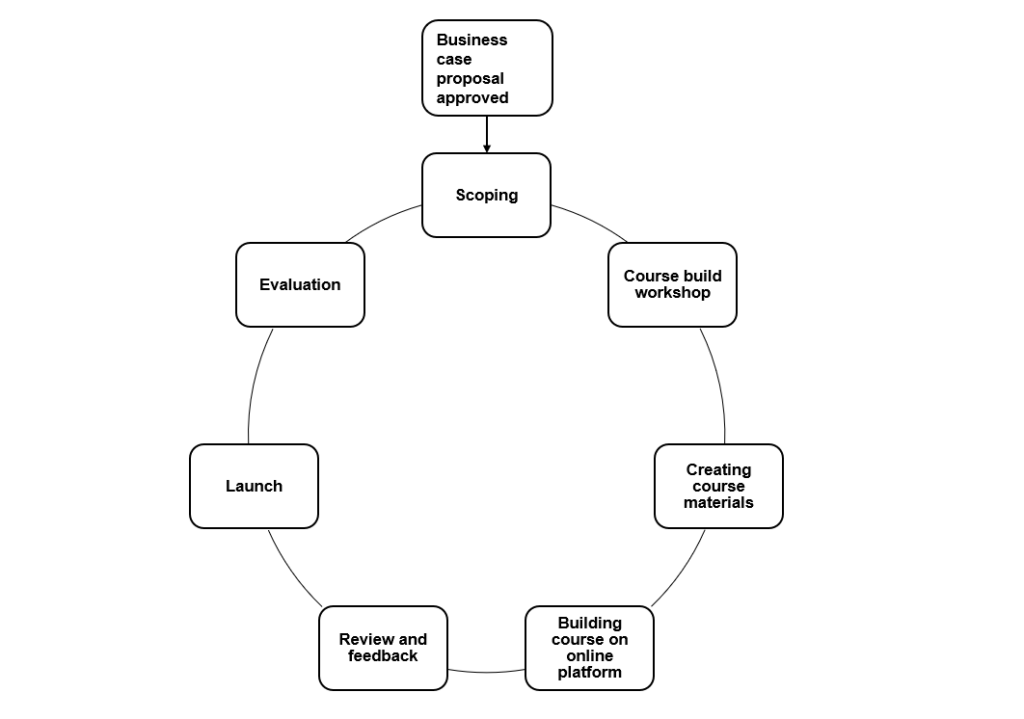
1. Business case proposal
Every project begins with a clear understanding of purpose and impact. The Business Case Proposal allows us to feedback on your idea and assess feasibility. We work with educators to:
- Discuss goals, target audience, and intended impact
- Decide strategic objectives and success measures
- Finalise timelines, resource requirements and next steps
This stage helps ensure that projects are viable, well-scoped, and aligned with one of a key University strategic objective as outlined in our framework for Short Online Courses.
2. Course build workshop
This is where ideas take shape. In a structured workshop, we collaborate with partners to:
- Map learning outcomes, course structure and target audience
- Storyboarding content and learner journey
- Identify suitable learning formats (articles, videos, activities, discussions)
- Share examples of effective online learning design
- Introduce platform capabilities and constraints
The workshop ensures a shared understanding of the course structure before content development begins.
|
One of the most useful sessions was right at the start of the process when we sat down as a project team and explored the ‘story’ of the course and the range of pedagogic approaches we could use. By the end of that session, the OC team had provided us with a collaborative understanding of our audience, the structure of the course and set the timeframe for the development of the materials. They continued to provide expert input to keep us on track and we’re really proud of the two (quite different) courses we produced. Dr Alice Mauchline Associate Professor, School of Agriculture, Policy & Development |
3. Creating course materials
We help translate subject expertise into engaging, learner-centred online content. This includes:
- Applying online pedagogy and learning design principles
- Aligning learning outcomes and course objectives
- Leading on the production of multimedia content
- Designing interactive activities
- Advising on writing for online learners
- Advising on copyright requirements for open online courses
- Ensuring accessibility, inclusivity, consistency and quality assurance checks
4. Building course on the platform
Once course material is ready, we build the course on the Learning Management System (currently FutureLearn). This stage focuses on creating a seamless learner experience. We:
- Structure content clearly within the platform
- Apply consistent formatting and signposting
- Integrate multimedia and interactive element
- Ensure accessibility and usability standards are met
5. Review and feedback
We share the built course with educators students and external collaborators (where relevant) for review. Together, we:
- Refine content and activities
- Check accuracy, tone, and flow
- Address feedback and make agreed changes
This collaborative review ensures academic integrity and quality before launch.
6. Launch
Once approved, the course is prepared for release. We support:
- Final quality checks
- Platform readiness
- Launch coordination
Our aim is to ensure a smooth transition from development to delivery.
7. Evaluation
6 months after the course launches, we review its performance. We look at:
- Learner engagement and completion data
- Feedback from learners
- Opportunities for enhancement in future runs
Evaluation helps inform improvements and supports evidence-based decisions for future runs of the course.
