
“Universities are living things: they feel, think and do. They are centres of intelligence; they are concerned with ideas; they have outposts upon the frontiers of knowledge; they sometimes do beautiful and remarkable things; they dream and imagine.”
These powerful words were spoken by the University of Reading’s first-ever Vice-Chancellor, William Macbride Childs, and have become rooted in our history ever since.
100 years ago today – on 17 March 1926 – we were granted our Royal Charter and officially became the University of Reading. At the time, we were one of only a handful of universities in England offering higher education teaching. And today, Reading is among the top 30 UK universities in the world and is home to over 27,000 students.
Did you know…
Throughout this year-long edition of CONNECTED, we will be highlighting key milestones and stories from different decades, starting at the very beginning.
Did you know… that our story goes back beyond a century?
Prior to becoming a University, we began as an extension college established by Christ Church College Oxford in 1892. We were known as University Extension College, Reading and provided higher education for the town’s people.
In 1900 Edith Mary Sutton established the first scholarship at Reading, worth £20 a year. Since then, we have continued to support our students financially and have been named University of the Year for Scholarships and Bursaries.
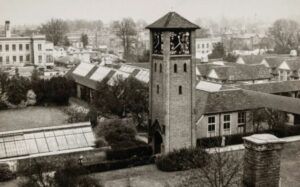
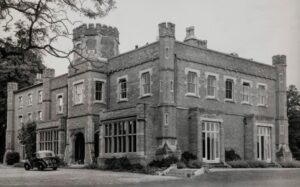
London Road was the University of Reading’s first campus – the site was gifted in 1904 from the Palmer family, owners of Huntley and Palmers Biscuit Factory – until the purchase of Whiteknights Park in 1947, which is now known as our Whiteknights campus.
From 1906 WM Childs worked to develop Reading into an independent university. He set out a plan for a residential college to include accommodation halls for students. The first of which, Wantage Hall, was opened in 1908. And today, we have 14 halls of residence on and off campus.
He recruited leading local supporters such as Lady Wantage, Alfred Palmer and George W Palmer – who donated £200,000 in 1911 – laying the groundwork for the establishment of the London Road campus.
In 1908 Edith Morley was appointed as Professor of English Language, making her the first female professor in England. And today, one of our buildings on campus – formally known as The Faculty of Letters – is named Edith Morley after her historical achievements.
From 1926-1946
Fast forward 18 years, the granting of the Royal Charter was the key moment that made us a University. Did you know that…
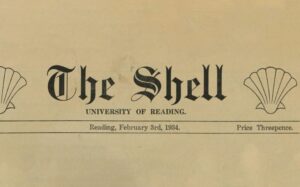 In 1934 The Shell student newspaper was launched and in 1988, the newspaper was rebranded and renamed The Spark. After a brief hiatus, the newspaper was relaunched by current RSU president Tiam Koravand, and today The Spark continues to inform and educate our students.
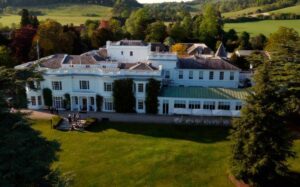 In 1946 Henley Business School was established at our Greenlands campus, making it one of the oldest business schools in the UK. And in 2008, Henley merged with the University of Reading to offer a full portfolio of business education.
In 1946 the Soil Association was co-founded by Reading alumna, Lady Eve Balfour, who was one of the first women to study agriculture at an English university. Since then, we have established a long legacy of soil research – namely our Soil Research Centre – a cross-disciplinary Centre of Excellence which brings together researchers to explore the challenges of this key resource.
Creating possibilities for tomorrow
But this momentous milestone is not just a reflection of our past. Our current Vice-Chancellor, Professor Robert Van de Noort, said:
Our centenary is also a beacon guiding us towards a future filled with promise, innovation, and impact. Together, we will continue to shape a better world for the next 100 years and beyond.”
Do you have an achievement, interesting story or memory that you’d like to share with us? If so, then we’d love to hear from you at alumni@reading.ac.uk because… your story is our story.
Centenary Wall of Wishes
The University also invites you to reflect on Reading’s journey so far through its Centenary Wall of Wishes – share your message with us as we celebrate this momentous year. You can add your message via our Centenary Wall of Wishes form.