

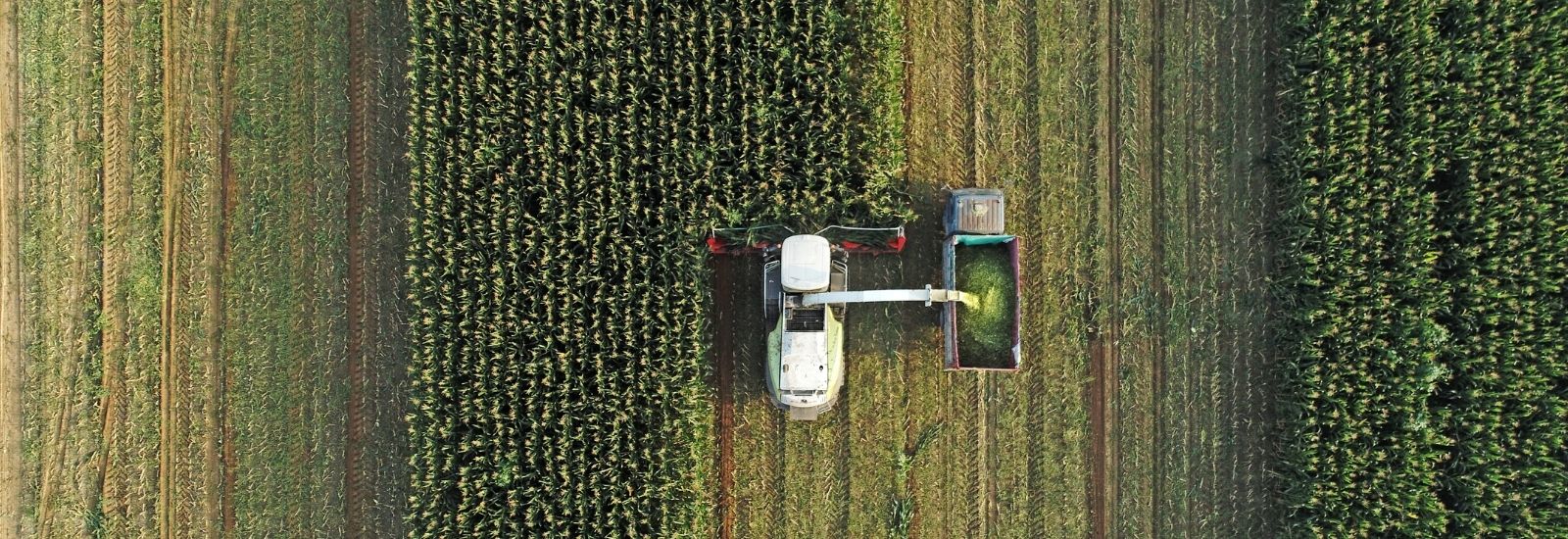
“I feel privileged to be a part of conversations that are shaping our future for the better. Climate change matters. The world needs us to think and do something about it,” Pete shared.
 Reading graduate, Professor Pete Falloon, is the Met Office’s Science Lead for Food Security. CONNECTED recently spoke to Pete about his time at Reading, his inspiring career and his love for food – especially cheese. He also shares how climate change is affecting agriculture and how we might respond to some of these challenges in the future.
Connecting the dots
Reflecting on what led him to pursue a career in food security, Pete explained that he’s always been fascinated by the natural world and had a strong connection to food.
“Growing up I’d always be in the woods – getting muddy or helping my mum in the garden. On family holidays to Cornwall I’d often climb up the cliffs with a rock hammer, whacking crystals out and accidentally showering people with Charleston Rocks!
“My grandparents also ran a pub in Wales and my father was a butcher by trade, so it’s no surprise that I ended up studying food and climate systems.”
Following his A Levels, Pete went on to study for a BSc in Environmental Science of the Earth and Atmosphere at Reading.
“It was the breadth of the course that appealed to me. I learnt about the hard science, but also how things related to each other in a practical way out in nature,” he shared.
“One of my biggest highlights were the field trips – everything we had been studying suddenly connected together and was brought to life.”
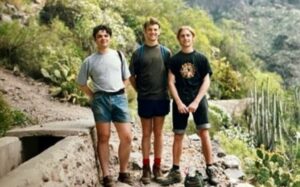 He added: “And the friendships I made were unforgettable. A group of us who lived near Cemetery Junction still talk about the outrageous parties we used to have.”
A green career
Pete went on to study at the University of Greenwich where he embarked on a masters focused on modelling pesticide fate in riverine systems. In 1996 he moved to Rothamsted Research where he worked on modelling soil, climate and vegetation interactions, whilst studying part-time for a PhD from the University of Nottingham. He continued with this work for the next eight years before joining the Met Office in 2004.
He is now Science Lead for Food Security and oversees the Met Office’s Climate Service for the Department for Environment, Food & Rural Affairs (Defra) on Food, Farming and the Natural Environment. His role provides scientific advice and guidance to Defra in support of climate resilience and adaptation in the agri-food system.
He explained: “A big part of my role is focused on research – not just conducting it, but bringing different studies together to build a bigger picture and applying the science in a real-world context. I’m also responsible for planning and delivering our strategy.”
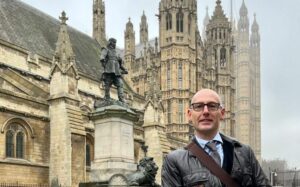 Turning his thoughts to some of his achievements, Pete shared: “I’m very fortunate to have been invited to speak at the House of Commons to MPs about the research we do, and highlight some of the future challenges for the UK and wider world.
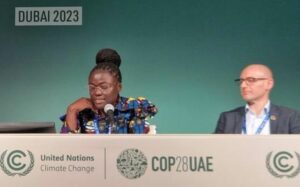 “My role has also taken me to several Conference of the Parties – from Glasgow, to Sharm El Sheikh to Dubai – and I’ve been given the opportunity to be part of important panel discussions. The most memorable one was sharing a stage with a former environment secretary.
“I feel privileged to be a part of conversations that are shaping our future for the better.”
Food Drink Devon
Alongside his role at the Met Office, Pete also works in academia. He is Professor of Climate Resilient Food Systems at the University of Bristol, and an Associate at The Walker Institute (now The Pearl). But his work doesn’t stop there – he is also Sustainability Director at Food Drink Devon.
“Food Drink Devon is an organisation that supports around 400 small businesses who take produce from local farms and turn it into a product or service,” he explained.
“We’ve recently been working with Devon County Council and Devon Food Partnership to organise a series of sustainability focused events. The aim is to get members and thought leaders to talk about how they approach sustainability to inspire others. We look at the whole spectrum – from marketing and labelling to waste and sustainability in general.
“So far they’ve been really impactful and I’m looking forward to building on what we’ve done in the future.”
Pete also shared that the role comes with one very enjoyable perk – trying local produce – and he reveals what some of his favourite foods are.
“I really like cheese and chocolate, but if I had to choose, I would have to say cheese because there’s so much variety. My favourites are Devon Blue, Rushmore, Ticklemore Goats Cheese, Quicke’s Cheddar and Sharpham Brie.”
He added: “And if I had to pick a takeaway, it would be Devon fish and chips.”
Building resilience to climate change
Pete shared his views on how climate change is already affecting agriculture and our food systems. He said: “Rising temperatures and changing rainfall patterns directly impact crop yields and quality, and could change which regions are suitable for growing different crops.
“We’ve seen the impacts in the UK recently. For example, the record-breaking high temperatures of summer 2022 reduced chicken meat production by 9%, led to millions of premature housed poultry deaths, and increased energy costs, while wet conditions in 2024 resulted in 20% lower production compared to 2023.
“But on the other hand, changing consumer demands and trends to help combat climate change will influence the crops that farmers grow.
“We need to look beyond production alone. The entire food chain – from ‘farm to fork’ – includes a host of activities that are impacted by climate change.
“In the long-term, we expect the UK to see warmer year-round conditions – hotter and drier summers, and warmer, wetter winters – along with an increase in extreme weather events like heatwaves, drought and heavy rainfall. As well as impacting food production in agriculture, horticulture, and fisheries both in the UK and around the world, extreme weather events could impact the wider food chain.”
Pete emphasised the importance of preparing for these challenges now.
“The UK’s agri-food sector is vital for our economy and employment. Because the food system is both complex and interconnected, we need to take a systems approach in adapting to the changing climate.
“There are many ways that weather and climate information can help build resilience. Localised weather forecasts can help support tactical decision making on farms, while longer-range forecasting can help plan transport, logistics and stock.
“A key part of this will be ensuring people across the food chain feel empowered by new information sources, and use them in making climate-resilient decisions. For that to happen, weather and climate services need to be tailored to their needs, understandable, and actionable.
“We also need to be mindful that any action we take could have further consequences – some will be beneficial and some might involve trade-offs.”
The world is changing
Climate change is one of the biggest challenges affecting our society, but Pete remains optimistic.
He shared: “It’s hard hearing the frustration from the countries who are being hit the hardest and not seeing action quickly enough. Just because we release some new advice or guidance, it doesn’t necessarily guarantee change tomorrow. But the world is changing and we all have a part to play.”
For those considering a career in this field, Pete’s advice is simple: “Try it.
“Careers in science and research require commitment and determination. Make as many connections as you can outside of academia – whether that’s in government, in business, in industry, or getting involved in food poverty in the local community. For me, that really made a difference in understanding how research and evidence fits within the world, rather than within the domain of knowledge and understanding.
“Do something that matters, because that’s what will drive you forward.”
Find out more about environmental science at the University of Reading.