
“Everything I do today really flows from Reading,” Honorary graduate, Dr Nero Ughwujabo, reflects on how his time at the University of Reading shaped a career dedicated to social justice, public service and creating opportunities for others.
 When Dr Nero Ughwujabo arrived in Reading from London as a teenager ready to start University, he found something unexpectedly familiar about Reading to his hometown in Nigeria. He recalled:
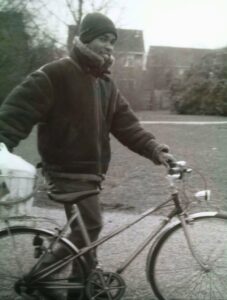
“I came from Nigeria to London when I was about 14 and then to Woodley in Reading at around 19. Woodley reminded me a lot of where I grew up in Nigeria. It was a quiet community, low-rise houses, bicycles everywhere.
“My favourite memory of Reading was riding my bike in spring and smelling the blossoms – we have a flower in Nigeria called queen of the night which smelt so similar – whenever I smell those flowers, it takes me straight back. The only difference was the weather.”
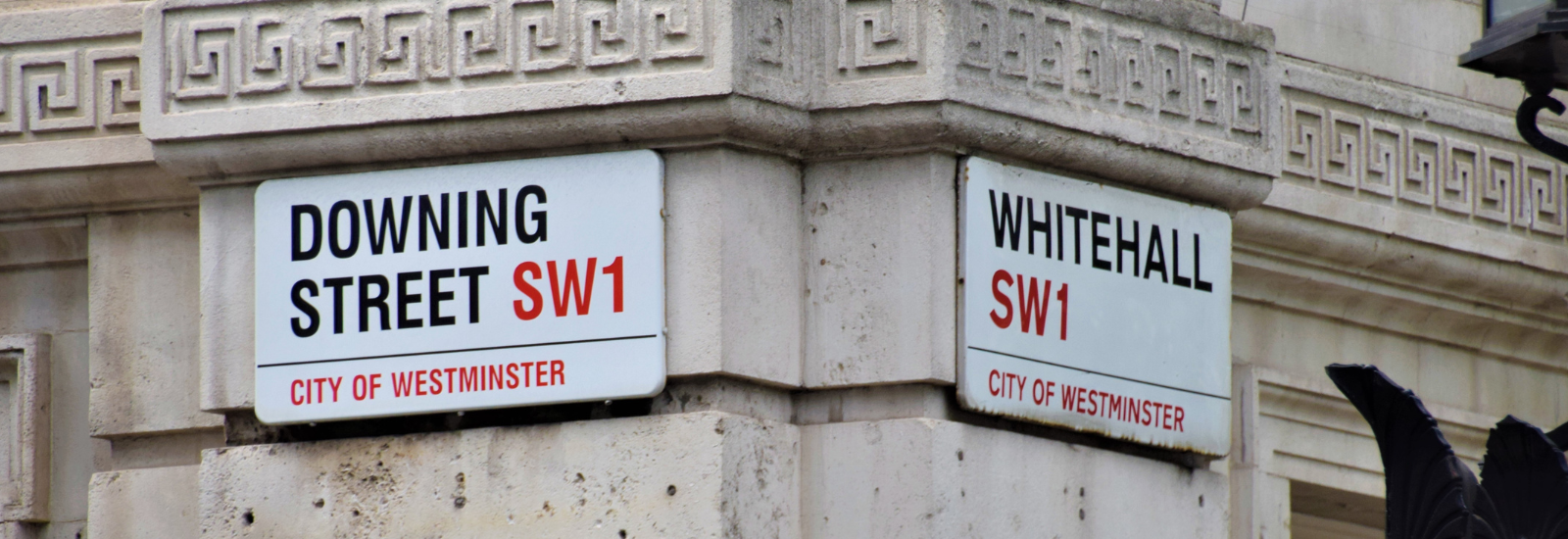
For Nero, those early days at the University of Reading marked the beginning of a journey that would eventually take him to the heart of government, advising a Prime Minster at Number 10 Downing Street and helping to shape national policy on equality, education and opportunity.
Finding a voice through film and drama
In 1994, as a first-year student, Nero was simply following a passion. Attracted by the University’s reputation and its proximity to London, Nero chose Reading to study Film and Drama. However, his love of performance had begun years earlier in Nigeria. He explained:
“When I was at school in Nigeria I was part of the debating and drama society – I loved reading and reciting Shakespeare which is quite a tradition in Nigeria. When I arrived in the UK, I was a top student in maths and science. But the subjects were taught differently, so I started to gain more interest in English and in media studies.
“As a young man I had a lot of stories to tell and I wanted to engage people, so film and drama fitted well with that interest.”
At Reading, he immersed himself in the creative process and found that one of his proudest achievements was producing his final-year film. He shared:
 “I have great memories of Reading; it was just an exceptional experience. Making my third-year film was really special to me. I loved making film prompts, ideas for storyboards, writing the script, getting actors, filming, lighting, production and editing. I loved having an idea in my head and creating something from that and I felt so fulfilled from being able to achieve the end product.”
The film explored themes of loss, identity and belonging through the story of a young man living overseas after the death of his father in Africa. When he screened it for friends, the reaction was unforgettable.
“They were literally screaming because they couldn’t believe that I made it.”
Lessons beyond the lecture theatre
After graduating, Nero co-founded a theatre company, Asylum Theatre, with fellow students – performing productions including Hamlet and Othello at the Edinburgh Festival Fringe over the summer.
However, as summer ended, opportunities in film proved limited. “A lot of my friends decided to pursue film but there weren’t so many jobs in the film industry during that time – it was very different from how it is now,” he explained. “So, I had to pivot my career”
A role managing a family-run nursing agency led him towards an MBA focused on public service and social justice. That shift opened the door to work with community organisations, local government and national policymakers.
“I became very well known for speaking up on issues around equality, diversity, inclusion and social justice, as well as the plight of white working-class communities in deprived neighbourhoods across the UK. This led to me speaking in Parliament on numerous occasions.”
For Nero, social justice and community action is a passion that began in childhood.
“From a young age, I’ve consistently been driven to work towards social justice. My father worked in the church and was recognised by Nigeria’s traditional ruler as peacemaker and developer of the community. He was incredibly active in the community, and he instilled those values of community in me. He was a great inspiration to me.”
Nero became increasingly involved in campaigns focused on equality, opportunity and tackling disadvantage. Working in Croydon, he gained a reputation for speaking out on issues affecting marginalised communities and helping organisations improve services for local communities.
His work eventually brought him into contact with senior politicians, first under David Cameron’s government and later under Theresa May. Following a series of policy discussions at the Cabinet Office and Number 10, he received an unexpected invitation. He shared:
“When David Cameron became the Prime Minister, I was asked to come and advise him on race equality. Then, when Theresa May came in, I was asked again to have the same conversation with her team. At the end of it, they said to me, ‘Why don’t you come and do this work for us?’”
Nero became a Special Adviser to Prime Minister Theresa May, making history as the first person of African descent to advise a UK Prime Minister. He shared:
“It weighed heavily on me. I was the only Black special adviser in the building.
“It felt great to have the opportunity at Number 10 to shape policy that impacts people across the country and is profoundly important. We want to build a better society for everyone.”
Creating lasting change
During his time in government, Nero worked on a number of significant initiatives, many of which continue today.
Among them was the review of school exclusions, an issue he had encountered repeatedly while working with families and young people.
“Exclusion has a huge impact, not just on young people but on their families,” he shared. “Those who are excluded have some of the worst outcomes of anyone.”
He also helped establish the Youth Futures Foundation, securing a £90 million endowment to tackle youth unemployment.
“I wanted something that lasts for the long term,” he explained. “It’s still there today and I’m very proud of it.”
Nero was also instrumental in creating Windrush Day, “When I joined the government for Black, Asian and minority communities, there was only Black History Month.
“I co-ordinated a number of organisations to look at important milestones that we could mark to honour these communities’ histories, and Windrush was one of them. This was before the Windrush scandal – then, when the Windrush scandal broke, it was very clear that this was a significant issue for a lot of communities.
“We celebrated the 75th anniversary of Windrush in that year. I introduced Windrush Day as a way of remembering the contribution of the Windrush generation to Britain.”
 Nero also supported the establishment of Stephen Lawrence Day. He shared: “We worked with Stephen’s mother, Baroness Lawrence, to make Stephen Lawrence Day a national day of recognising not only his death, but his aspirations as a young person and the contribution of his mother. That’s still being celebrated today.”
“People across the country mark these days. They use them as a way of building bridges between communities.”
Building bridges
Throughout his career, Nero has focused on bringing people together and acknowledges that working for change can be challenging.
“You face challenges from both ends. You face challenges from institutions that feel you’re agitating too much, and from communities that feel you’re not agitating enough.”
His response has been to focus on dialogue and understanding.
“Ignorance is a big problem in our society. If we can only talk to people and engage people, we can bridge some of these divides.”
Today, he continues his work as Head of Equality, Diversity and Inclusion at the King’s Trust, helping ensure young people facing significant barriers can access opportunities and support.
A return to Reading
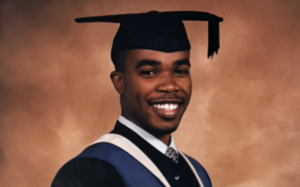
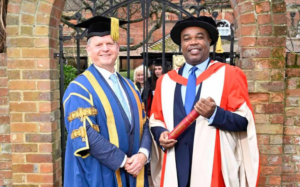 In 2025, Nero returned to the University for the first time since graduating to receive an honorary doctorate. He said:
“When I got the letter from the Chancellor, I was actually trembling. The University of Reading is the place where I became a man. It was the first time I lived alone, away from family and had to fend for myself.
“Everything I do today really flows from Reading,”
Friends from his student days joined him for the ceremony, alongside family members and colleagues who had shared his journey.
“People who have become friends for life from Reading were there. It was a profoundly emotional experience.”
Looking ahead
For those who want to be involved in public service, policy or social justice, Nero’s advice is simple: “Engage with the issues that matter. Policy is really about understanding problems and finding solutions.”
He encourages everyone to stay curious, listen to different perspectives and take action where they can.
“If you have an issue that you’re particularly concerned about, read about it, learn about it, take a position, take a stand.”
As for the honorary doctorate, he sees it not as a culmination, but as a motivation. He shared: “I’m so grateful to the University for that recognition and honour. It means a lot to me, and I do see it as an invitation to double down and do more.”