Eco-CSI: “Where have all the hedgehogs gone?”

Eco-CSI: “Where have all the hedgehogs gone?”


By: Dr Laura Girling, School of Agriculture, Policy and Development laura.girling@reading.ac.uk
Photo by Alexas_Fotos on Unsplash

Overview

“Eco-CSI” is an inquiry-based, active learning session; and is the first of three RAFT (Resilience, Acceptance, Friendship & Teamwork) workshops.

Students collaborated in their Academic Tutor groups to practice skills in analyse and evaluation of the evidence and interview stakeholders, also whilst developing connections with their peers, building confidence with staff, and creating a sense of belonging.

Objectives

Aim of the Eco-CSI session was to:

  • Build connections and foster collaboration among students and teaching staff of the EMS Programme (Social interactions)
  • Explore potential anthropogenic factors contributing to species decline (discipline knowledge)
  • Practice critical thinking, evidence-based reasoning, problem solving and communication skills within a local sustainability context (skill development)

The wider RAFT related aim to build a sense of belonging and support student transition to university underpinned this session.

Context

Students identify making friends as a major concern when starting university. This session, embedded within our RAFT programme to support student transition into university, was designed to address this by aligning with the four elements of Allen et al.’s (2022) Belonging Framework. It provided a low-stakes opportunity for students to collaborate with both peers and staff, helping to build connections, confidence and communication skills.

The session integrated academic skill development including teamwork, problem solving and critical thinking, which align with the modules learning objectives, and were embedded within a subject-specific theme.

Implementation

The activity was delivered in week 2 as part of the AD1KSE module with EMS teaching staff in attendance. Students worked in their academic tutor groups (~5 individuals) and were tasked with investigating “where have all the hedgehogs gone?”, and to suggest a management plan to support the campus hedgehog population.

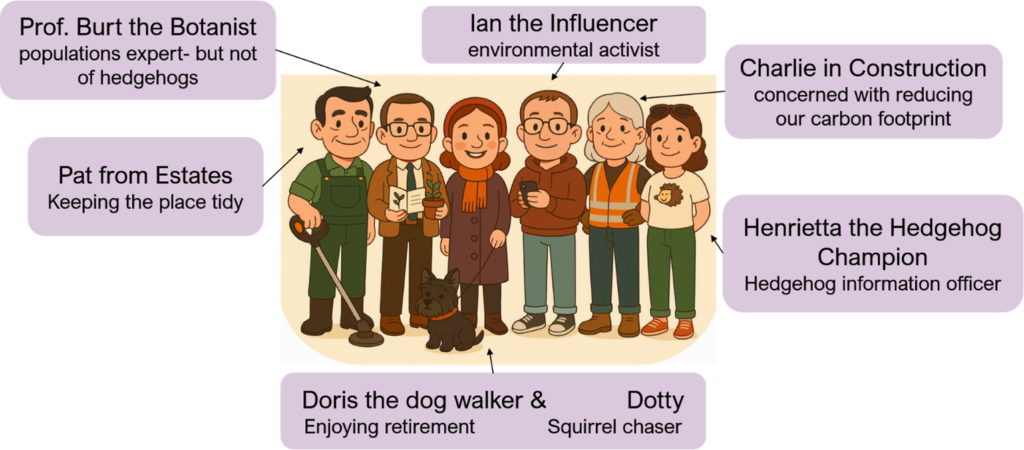
Following the initial briefing on the scenario, groups were distributed across three rooms to enable students to provide space for discussion. Each group received a pack of “evidence” containing a mixture of real and scenario-generated documents of varying quality and relevance. The teaching staff role-played “campus stakeholders” (figure 1) and were interviewed by each group, presenting their opinions and knowledge about the issue. Students were required to critically evaluate the reliability and value in understanding the issue of both the stakeholder interactions and paper evidence.

Illustrated stakeholder map showing six cartoon characters and a small dog, each identified by a labelled callout box. From left to right: Pat from Estates, described as “Keeping the place tidy,” stands with gardening equipment; Prof. Burt the Botanist is described as a “populations expert – but not of hedgehogs”; a central figure is labelled Ian the Influencer, an “environmental activist”; Charlie in Construction is described as “concerned with reducing our carbon footprint”; and Henrietta the Hedgehog Champion is the “Hedgehog information officer.” At the bottom, a dog is labelled Dotty, “Squirrel chaser,” and the accompanying owner is labelled Doris the dog walker, “Enjoying retirement.” Arrows link each label to the relevant character. The diagram illustrates a diverse group of stakeholders with different interests and expertise related to a hedgehog or environmental project.
Figure 1. University of Reading Key campus stakeholders. Each character contributed evidence towards the Eco-CSI – “Where have all the Hedgehogs gone?” workshop and were role-played by a member of the SLM teaching team. Image generated by Microsoft CoPilot.

Groups reflected upon information, formed a response, and identified strategies to support the University’s hedgehog populations, before feeding back their ideas to the class and tutors. Formative feedback was verbally provided, and a winning group was identified based on the overall quality of their analysis and proposed management plan.

Impact

The session gave student the opportunity to experience all four elements that feature within Allen’s et al. (2022) Framework for Belonging and aligned with the objectives, particularly around creating meaningful social interactions and building competencies.

A Likert-scale evaluation (1= not at all; 5= completely agree) was conducted following the session.  The highest scoring outcomes were increased “comfort” (4.6) and “confidence” (4.5) of speaking with teaching staff, suggesting reduced perceived barriers between students and staff. The lowest scoring outcomes, although still overall positive, related to speaking to other students (3.4) and feeling a sense of belonging (3.9). This suggests students may find peer interactions more challenging than interactions with staff at this stage of their university transition and that a single intervention is unlikely to be sufficient in establishing a strong sense of belonging.

Although not quantifiable, there appears to be a greater sense of openness between students and staff, with more students flagging concerns or absences of others within the module to the module convener than in previous years.

Reflections

The success of this session was hugely dependent on the strong buy-in of teaching staff; fully embracing in the role-play and keeping the session interesting and fun. The alignment with Allen et al.’s (2022) Framework for Belonging ensured the activity utilised competencies to promote collaboration and provided opportunities and motivations to engage by being authentic, discipline relevant and involve active learning, whilst also being low-risk, reducing concerns around performance. The competitive element further enhanced motivation and engagement, fostering a sense of belonging within their tutor groups.

This session was resource heavy, requiring six members of staff and significant preparation. Given the difficulties in measuring the long-term impacts, some staff might question if the outcomes justified the costs. Opportunities to streamline the session may include the “stakeholders” attending for only 1 hour- and requesting a location nearer to staff offices. In addition, providing written feedback – particularly  highlighting academic skills involved – could support students’ reflecting on the session in the future.

Follow up

This session is part of the RAFT intervention and the full programme evaluation scheduled for August 2026. Subject to positive evidence and staff-by in, we intend to run similar activities in future years. Key areas to develop include identifying ways to minimise staff resources required, and ensure formative feedback is captured effectively so it can be used as feedforward.


References

  • Allen, K., Kern, M. L., Rozek, C. S., McInereney, D., Slavich, G. M. (2022). Belonging: A review of conceptual issues, an integrative framework, and directions for future research. Australian Journal of Psychology, 73(1), 87-102. https://doi.org/10.1080/00049530.2021.1883409


Exploring the Accessibility of Teaching for Deaf Students

Exploring the Accessibility of Teaching for Deaf Students

By: Emma-Jayne Conway, Adult PWP Programme Director, Lecturer in Clinical Psychology, Module Convenor, emma-jayne.conway@reading.ac.uk


Context

Size of the cohort: less than 20

The Programme of study: Postgraduate taught

Applies to the following aspects of the student experience:

  • in class test
  • coursework (essay)
  • coursework (research report)
  • seminar environment
  • teaching materials
  • lecture theatre
  • style of presentation (by staff)
  • style of presentation (by students)
  • group work
  • placement
  • field trip
  • exam (on campus)
  • exam (online)
  • other

Overview

Objectives

Context and implementation

This case study focuses on our experience of supporting two Deaf students enrolled on a clinical training programme (Psychological Wellbeing Practitioner [PWP] training). In this section, we outline key considerations and steps taken to ensure the equity of the training experience for Deaf trainees as far as was possible:

Getting initial support in place: for context, our students are typically employed in NHS Talking Therapies services and are recruited by services only a month or so prior to enrolling with us. This leaves little time for them to apply for the financial assistance (Disabled Student Allowance, or DSA) required for essential support during training, including notetakers and interpreters, and meant that for both students, a significant amount of time was spent by the team to ensure that this support was in place at the start of their training. As well as ensuring support for our students, it was also important for the team and other trainees to receive specialist guidance on working with Deaf people, and this was delivered prior to the start of our courses for admin and educator staff and at induction for students.

Supporting facilitators to support trainees: throughout the training year, it was important to use a small and consistent team of interpreters and notetakers, and to frequently check in with our Deaf trainees regarding their experience of this support. We also were also mindful of the jargon-based and potentially emotional nature of the training, and to this end ensured that all teaching slides and related resources were sent across to facilitators in good time to ensure they could get in touch with any questions. Going forwards, we would take additional steps to check in regularly with facilitators regarding the emotional impact that this work may have evoked.

Practical adaptations in teaching: to safeguard equity in teaching, we had to ensure that all video and audio resources were accessible (e.g. closed captions), and that online learning platforms were fit for purpose. This meant that during live online teaching on Blackboard Collaborate, interpreters and notetakers, along with our Deaf students, had to log into a simultaneous Zoom call to provide/access interpretation of the taught content. We also needed to think carefully about clinical skills training. Traditionally, this has relied on observing roleplays with students playing the role of patient and PWP. As our Deaf students delivered their clinical work in BSL, it was important to facilitate this in teaching, with BSL partners brought in wherever possible (we only had one deaf student in each cohort, so it was not possible for them to roleplay with each other).

Adaptations in assessments: to safeguard equity in assessment, it was important to consider the impact on timings of a BSL speaker having to role play with someone using English (the duration of these assessed role plays were doubled). For clinical treatment recordings delivered in BSL (that were then translated for our English speaking markers), we needed to be mindful of inaccuracies that may arise in translation, as well as differences in communication style across the hearing and Deaf communities. It was helpful to consult with Deaf clinicians when any issues arose around this.


Impact

The adaptations implemented had a positive impact on the learning experience and equity of access of our Deaf trainees. By ensuring that essential resources and training were in place from the start of the course, it helped to reduce stress and uncertainty for the students whilst also promoting a culture of awareness and sensitivity within the cohort.

The use of a consistent team of interpreters and notetakers provided a sense of continuity, which allowed trust to be built between the Deaf students and their support team. One of the interpreters commented that the sharing of teaching materials in advance was particularly useful, “The educators making sure that we received the slides and other resources before the teaching day made the single biggest difference to my ability to support the student.” This allowed interpreters time to clarify jargon-heavy or emotionally complex content in advance, thus improving the quality of interpretation.

To ensure equity in teaching and assessment, several adjustments were made to the learning environment and summative assignments including role-playing with role play partners in BSL during clinical skills and the educator team consulting with Deaf clinicians when marking treatment recordings. This proactive approach ensured that our trainees could fully participate in lecture discussions and activities and were not disadvantaged by having their assessments marked by non-BSL users.

Overall, it was commented that these adaptations reflected a positive, ‘can do’ attitude from the educators and admin team. The increased awareness for staff in working with Deaf students will have a lasting impact beyond these cohorts.


Reflective practice

What went well: Adjustments were made and the students successfully passed the course with their cohort. A key reason this worked well was due to the team communicating effectively with all stakeholders and working together to problem solve and troubleshoot. The team would regularly discuss this within the weekly team meetings to ensure actions were being met.

What could be improved: Due to the way our courses are funded, our student numbers can be confirmed very close to the start of the course. Therefore, provisions had to be organised with short notice. There were delays to accessing more immediate support like ad-hoc meetings, as it took time to book interpreters and left the student accessing immediate support via email. Furthermore, the preparation and adjustments made took a large amount of staff time which was not factored into the staff workload model.


Advice for colleagues

When making significant adaptations to a programme to promote inclusivity, it is helpful to think about the student’s journey sequentially.

Firstly, identify the initial steps needed to prepare the student requiring support, the other students on the course and the educator team before the course begins. This might include upskilling staff (e.g. additional training) and increasing awareness among students (e.g. open discussions), so all are better equipped to provide and create an inclusive environment.

Secondly, adopting a flexible approach to preplanned adaptions will allow you to continuously review whether the adaptions implemented are meaningful. Establishing regular opportunities for feedback is important, as well as using a variety of feedback methods (e.g. Padlet, module evaluations, academic tutorials).

Finally, it is crucial to reflect with students, staff and stakeholders on the adaptions implemented and the process of orchestrating the implementations, including the sustainability of making such adaptations. Having protected time to reflect can generate important discussions that inform future pedagogy. And lastly… remember to disseminate!

Creating a cross-programme roleplay video library for diverse learners in clinical skills training

Creating a cross-programme roleplay video library for diverse learners in clinical skills training


By: Anjali Chandar, School/function, a.m.chandar@reading.ac.uk

Size of the cohort: 21-50

The Programme of study: Postgraduate taught

Applies to the following aspects of the student experience:

  • in class test
  • coursework (essay)
  • coursework (research report)
  • seminar environment
  • teaching materials
  • lecture theatre
  • style of presentation (by staff)
  • style of presentation (by students)
  • group work
  • placement
  • field trip
  • exam (on campus)
  • exam (online)
  • other: OSCA and self-study

Context and implementation

he Charlie Waller Institute (CWI) is a vocational department within the School of Psychology and Clinical Language Sciences, that trains mental health
practitioners delivering CBT or CBT informed interventions. Students across several CWI programmes consistently shared (or demonstrated via their
assignments) that they needed more support in developing core clinical skills. Some of our trainees have additional needs such as autism and/or anxiety and
found that they wanted additional time to watch and process video demonstrations of the skills they needed to use with their real life clients.
To address this feedback, I led the creation of an online Roleplay Video Library, bringing together 57 short demonstration videos of essential CBT skills. These
were either created collaboratively with staff or curated from existing recordings, and were typically 5-10 minutes long.
I considered several inclusivity needs during development:
• Accessibility: videos are short, chunked, labelled, and easy to navigate; and all videos are hosted in a central, predictable location accessed via Blackboard
(and stored on Sharepoint).
• Neurodiversity: the videos enable repetition, pausing, slower viewing, and reduced cognitive load, which may support our neurodivergent learners.
• Confidence and anxiety: students who struggle with performance anxiety can learn skills privately and repeatedly before OSCE exams and real life sessions
with clients.
• Consistency: every trainee, across programmes and tutors, now sees the same core modelling, ensuring skills training is consistent and accurate.
• Teaching aid: lecturers have embedded the videos into teaching, often sharing a video in teaching before students are asked to roleplay with their peers.
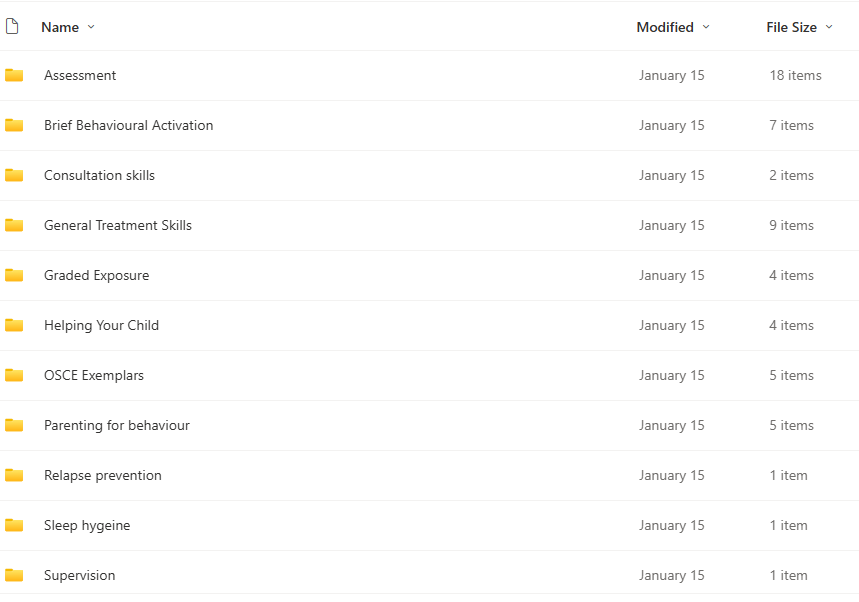
I implemented the project by sourcing past videos that might be suitable to include, coordinating contributions from staff to create roleplays, created a lot of
videos myself, created a shared structure to organise the videos on Sharepoint, and created a spreadsheet to detail the video, which folder it was saved in,
and elements of best practice to look out for. I continue to request feedback from students and staff about any videos that might be missing, that we can
then record and add to the library.
The library is now fully accessible across all programmes within CWI, and is used in class and independently by trainees. Crucially, other programmes have
begun creating similar resources, indicating cultural and systemic impact beyond the initial project.


Impact

This work was important because students needed additional support with their clinical skills, and were asking for further support from university. We were
also noticing that some of these skills were not being particularly well demonstrated in clinical video recordings of our students with their real life clients.
The Roleplay Video Library has provided an accessible, repeatable, self-paced way for trainees to learn and revise key CBT skills. Students report that the
videos are a “great resource” that helps them feel more prepared for real life sessions, and supports their understanding of what competent skills look like.
Neurodivergent trainees in particular, may value the ability to pause, rewind, and rewatch demonstrations at their own pace.
Lecturers consistently use the videos in teaching, leading to greater consistency and fairness across lecturers’ and what we expect to see from our trainees
during in-class roleplays, or their clinical assignments. The project has also inspired other teams to create parallel resources, extending the reach of the
impact.
Overall, the video library has improved confidence, inclusivity, accessibility, and cohesion in skills training.


Reflective practice

I initially created this resource to respond to student requests for more support with their clinical skills. However, in creating this library, and reflecting on its
value, I can see now how it benefits a wide range of students, e.g. anxious or neurodivergent trainees.
I also reflect on how tricky it can be to demonstrate skills in a timely way. For example, we might expect our students to complete an activity in 5 minutes, but
when I have roleplayed it for the library, it’s taken me closer to 10 minutes. This therefore allows me and my team to reflect on the timings we expect of our
trainees, and we have now given additional time (an additional 5 minutes) in the OSCE assignment to ensure all material is covered. We have also removed
the ability to auto fail if the roleplay is not finished within the time. It has therefore had a huge impact on designing fair assignments too.


Advice for colleagues

Make a start! Even a small library of videos of the most important skills could make a big difference to students who need repeated access. I would recommend the videos are easily labelled, with a spreadsheet that indicates what each video entails so students can choose which video is most helpful in advance, and stored in an obvious, accessible place. Seeking feedback is essential. Students can suggest the most helpful topics to be created as a priority. Share the load. See if other lecturers would be up for recording videos, particularly if they usually demo these skills in their teaching days already. Spreading the workload can mean that more videos are created in a shorter space of time. Please do reach out to me via email if you want any help in setting this up, or to let me know if my case study has encouraged you to create a similar resource library for your students!

Enhancing Students’ Sense of Belonging in a Global University

Enhancing Students’ Sense of Belonging in a Global University


By: Professor Elisabeth Wilding & Professor Daguo Li, International Study and Language Institute (ISLI), e.a.wilding@reading.ac.uk; d.li@reading.ac.uk


Excerpt

“This case study reports on a one-year initiative to develop collaborative exchange activities for undergraduates involved in transnational (TNE) programmes offered at both the NUIST Reading Academy (Nanjing, China) and the University of Reading”.

Overview

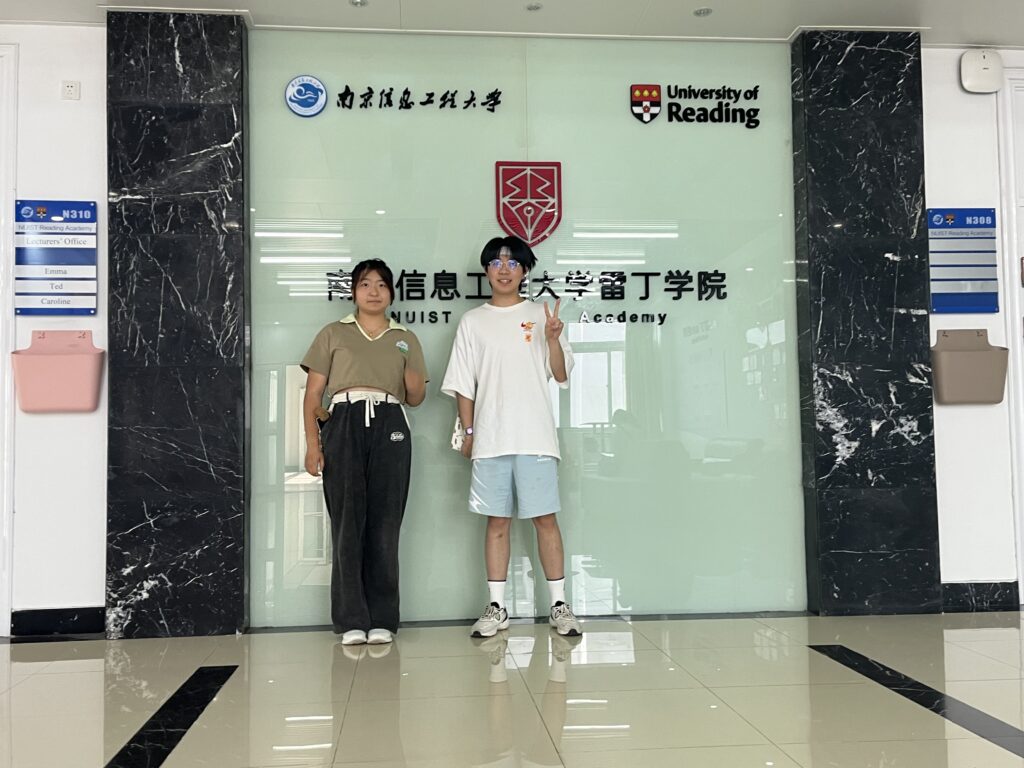
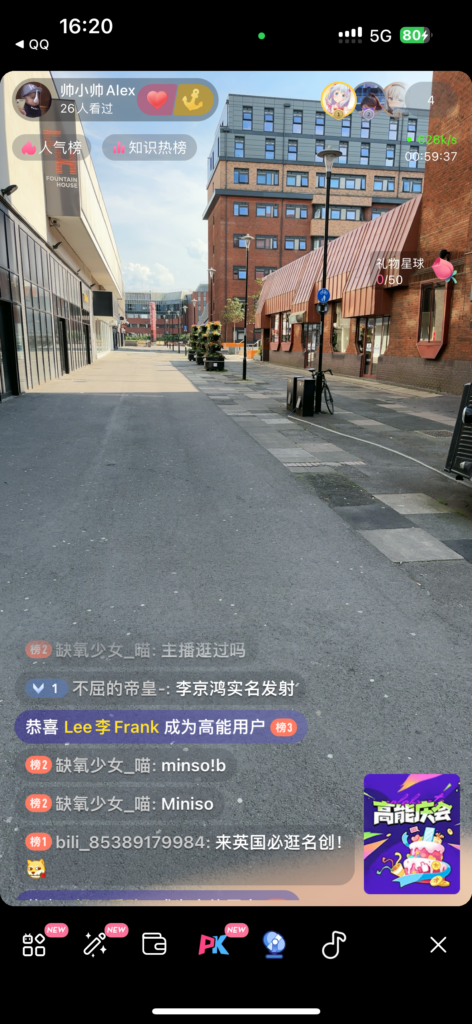
By working with students, we developed both staff-led and student-led activities to create opportunities for inter-campus interaction. As a result, there was an increased level of collaboration between students in China and the UK, through online conversation cafes, an intercultural communication seminar, and two live broadcasts.


Objectives

· To develop collaborative exchange activities for students involved in programmes offered at both the NUIST Reading Academy and in the UK.

· To build sustained interaction that would enhance the students’ feeling of belonging within our global university.

· To have a positive effect on the overall student experience.


Context

The project was designed in response to concerns voiced by students at the NUIST Reading Academy (China), who reported how they felt a lack of interaction or connection with the UK campus. We aimed to engage students on the two campuses in shared activities that could enhance experiences for everyone.


Implementation

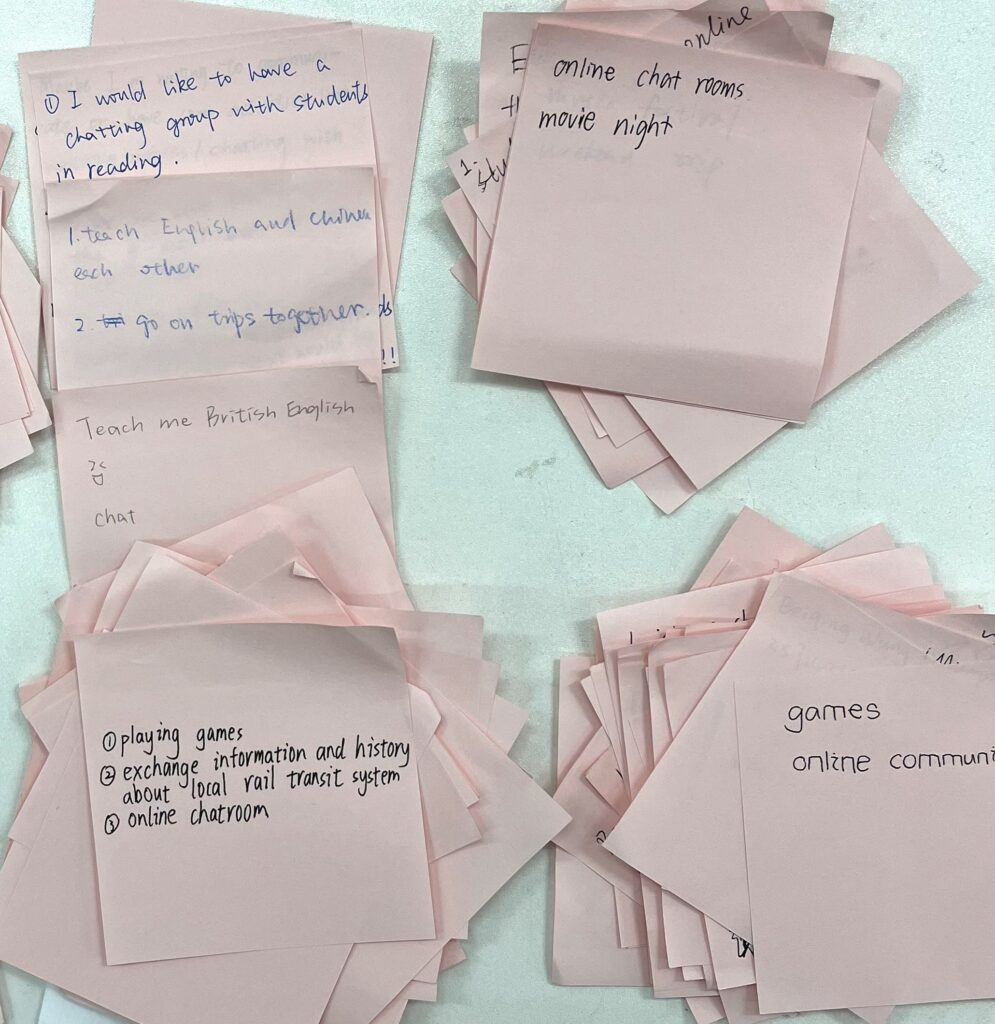
1. To launch the project, we collected input from Nanjing-based students on their ideas for collaborative activities.

2. We held a series of meetings with our student partners, including an induction, as well as brainstorming and planning sessions.

3. We encouraged students to tak

e the initiative to suggest and lead activities.

o Two student partners worked together to successfully organise broadcasts from the UK to enable Nanjing-based students to sample “live” the UoR campus life and town life.

o Other partners attempted to engage RUSU student societies in collaborative activities (though with less success).

4. Staff-led activities were run concurrently, including an intercultural communication workshop with Nanjing- and Whiteknights-based students during a flying faculty visit to the Academy. We also arranged for Academy students to have access to the Online English Conversation Cafes at UoR, which attracted a number of enthusiastic participants from China. Both of these activities will be sustained beyond the project end.

5. Student feedback was collected at each stage.


Impact

The Project has achieved its objectives overall. , There was an increased level of interaction between students in China and the UK. Here is one example: The Academy students now have access to the online English Conversation Cafes that take place about every two weeks during term time. We have records that students signed up to the Cafes, and a number gave positive feedback to the organiser. Both students in Nanjing and Reading benefitted from the online intercultural exchange, so we will continue in 2024/25.

We have also learned valuable lessons from this experience. Challenges included engaging student partners on the student-led activities. It was partly due to assessments and crunch points in student life.


Reflections

· For student-led activities, they were more successful if student partners had experience of organising similar activities already.

· Initial staff encouragement, support and monitoring for student-led activities were important.

· Integrating staff-led activities proved to be successful and sustainable.

· Long-term planning would be needed if activities are to involve student bodies such as the Students’ Union or its societies. The length of the Project meant that it was impossible to do long-term planning.


Follow up

Online English conversation club, Intercultural Communication workshop and increasing student exposure to UoR presence in Nanjing have continued even after the project.


Evaluation and impact planning shifted our focus: what UoR staff and students told us about Blackboard Ultra & how TEL responded 

Evaluation and impact planning shifted our focus: what UoR staff and students told us about Blackboard Ultra & how TEL responded 

An institution-wide evaluation of the university move to Blackboard Ultra, and what the data surfaced about course design, student belonging and inclusion. 

By: Jacqueline Fairbairn SFHEA and Emma Herrod SFHEA
Technology Enhanced Learning, Centre for Quality, Support and Development
 

 Excerpt 

“Rather than simply evaluating a platform, we found ourselves exploring how everyday Blackboard practices shape the student experience.” 

Overview 

The University moved every programme onto Blackboard Ultra in 2024/25. The Technology Enhanced Learning (TEL) team used the switch to Ultra as an opportunity to create a more accessible and engaging digital learning experience for students by introducing a new institutional course template, promoting more consistent course design in Blackboard, and encouraging new approaches to teaching and learning across the University. 

After the first academic year of use, we wanted to know if the anticipated benefits were realised, so we ran a mixed-methods evaluation with staff and students. 

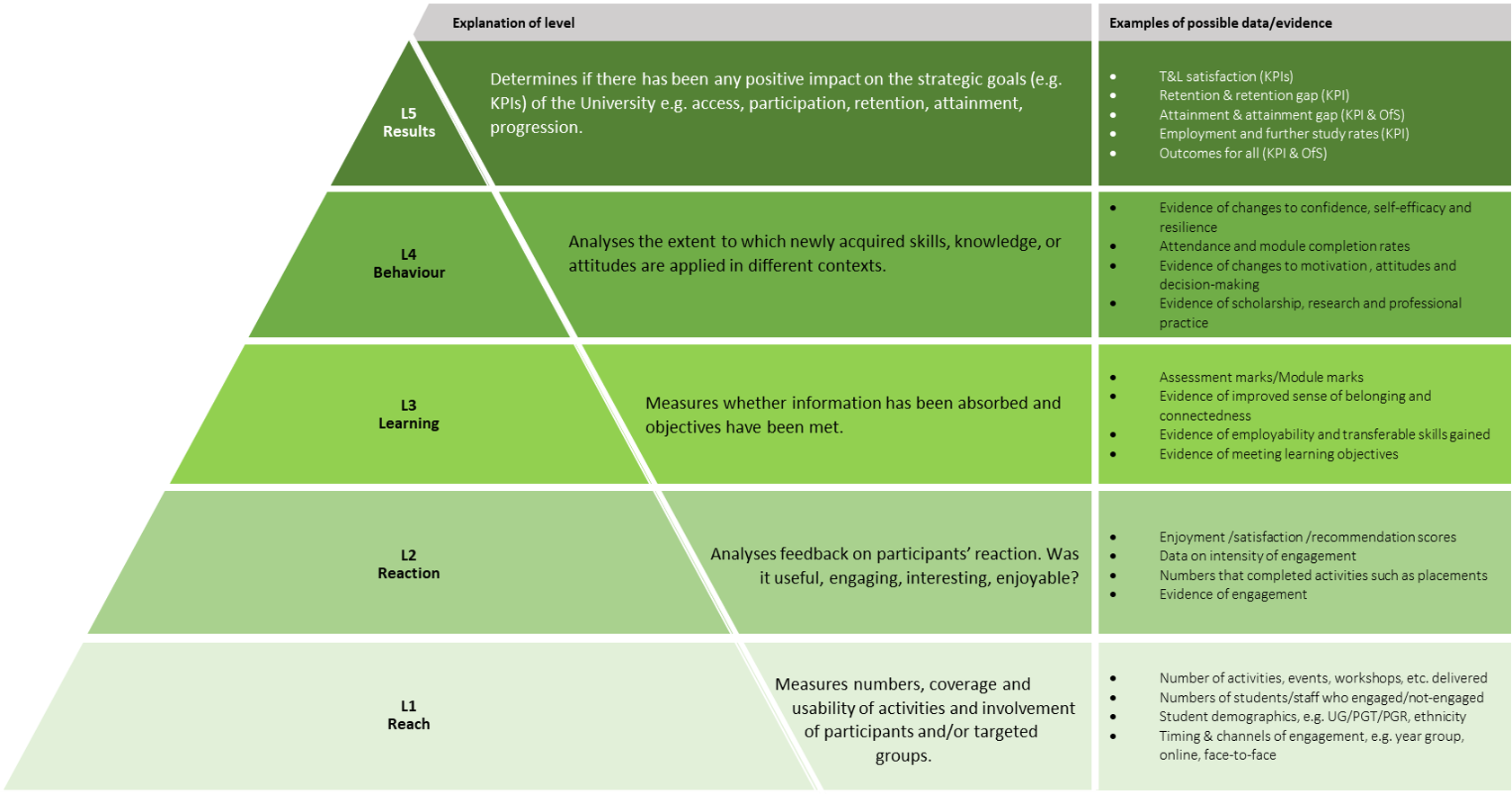
We found it useful to think about our evaluation using the Five Levels of Impact model. Our surveys and focus groups gave us plenty of evidence around Reaction and Learning, whether staff and students found the new features helpful, and whether they felt more confident using Blackboard.  

What surprised us was how far the qualitative data pushed us up the evaluation model towards Behaviour. These were changes in confidence, independence, and sense of belonging, particularly for widening participation (WP) students already navigating other barriers. Students talked about greater confidence, independence and belonging, particularly those from groups already navigating additional barriers to learning. 


Objectives 

  • To understand how staff and students were experiencing Blackboard Ultra and the new institutional template, beyond simply whether people could use the system. 
  • To find out whether the move to a clearer and more consistent course structure was landing as intended, particularly for WP students. 
  • To use what we learned to shape our Technology Enhanced Learning (TEL) support and guidance, and to feed evidence-informed findings into wider institutional conversations about the role of Blackboard in teaching and learning. 

Context 

The University is a medium-sized HE institution, so the move to Blackboard Ultra was a significant undertaking with over 27,000 students, around 1,300 academic staff, and colleagues teaching across the UK, Malaysia and China; from a TEL perspective we support more than 2,300 Blackboard courses. All 14 academic Schools moved to Blackboard Ultra at the same time. We supported this with over 160 staff development sessions (650+ staff trained), roadshows across Schools, and a network of Ultra Champions. 

Alongside the migration, we introduced a standard institutional course template, built around  

  • a flat structure that limited folder nesting 

These choices aimed to reduce cognitive load, make things easier to find, and support more intentional course design, rather than Blackboard functioning as a file repository.  

Implementation 

For our evaluation data, we took a mixed-methods approach because we wanted both the breadth of a survey and the depth of user discussions.    Implementation diagram
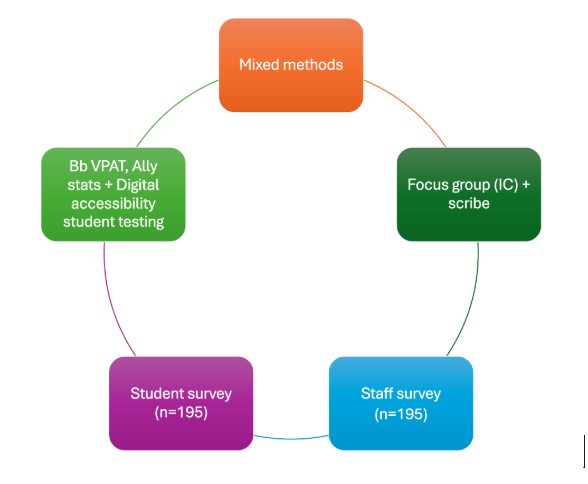
  1. Focus group: we met with ten of the university’s student Inclusion Consultants, with a scribe on hand, and asked them to walk through their own Blackboard courses live, narrating what was helpful and what wasn’t. 
  2. Written reflections: the same students followed this up with independent written reflections via Padlet, which gave us further material for thematic analysis. 
  3. Staff and student surveys: we ran an institutional survey (195 staff, 195 students), combining Likert-scale and open-response questions. We piloted the questions with student partners and our TEL practitioner forum first, which led to some useful revisions around terminology and question ordering. 
  4. Platform and accessibility data: we drew on Blackboard’s Ally statistics and worked with our digital accessibility officer and student volunteers to test a sample of courses, focusing specifically on instructor practice rather than the system’s built-in accessibility. 

We were interested in three things in particular: how helpful people found Ultra’s features; how well the new template supported navigation and wayfinding, and what people thought of our TEL support and guidance. The aim was to produce a descriptive, exploratory piece of work to surface insights about how Blackboard Ultra was being adopted. 

Impact 

For instructors; the main headline was that staff confidence in using Blackboard was consistently higher than their confidence in designing Digitally Enabled Learning within it. Under time pressure, a lot of modules were understandably starting out as content repositories rather than properly sequenced learning spaces. Feature usage backed this up:  

  • two-thirds of staff weren’t using Bulk Edit;
  • half weren’t using the course search bar,  
  • a quarter weren’t using Ultra Documents at all, often because the priority was simply getting content moved across rather than redesigning it. 

For students; the picture was more nuanced once we broke it down by widening participation group: 

Black, Asian and other minority ethnic students reported particularly strong positive perceptions of the new template, around ten percentage points above the overall baseline on questions about navigation and wayfinding. Their comments suggested Blackboard was helping them navigate academic expectations more broadly, not just locate files. 

“From a learner’s perspective, Blackboard functioned as a centralised academic hub, enhancing the coherence and self-regulation of my study practices.” 

Commuter students particularly valued features that supported quick, flexible, just-in-time engagement such as announcement pop-ups, a consistent mobile view and the course search bar. For these students, clear structure wasn’t just convenient, it helped them be more strategic with their time. We were struck by how much they wanted to see active lecturer presence in their courses; they liked feeling connected to the module as it unfolded. 

“Being able to use my phone and still have the same layout really helps me stay on track when I’m commuting.” 

 Students reporting a long-term health condition or learning difference told a different story. This group was furthest from positivity averages and showed the greatest sensitivity to inconsistency in layout, file naming and assessment visibility. They valued the system update itself, but inconsistent instructor practice within the course template was amplifying anxiety rather than easing it. 

“Overall, I believe the update of Blackboard Ultra to have been a significant factor in terms of easing my anxiety about my studies and examinations this year.” 

“Sometimes the assignment info was a bit all over the place, across different [template] sections, which made it difficult to make sure you’d read all the information needed.” 

 Taken together, the message was consistent (even where the experiences differed); clear, predictable course design changes how confident and connected students feel, and the effect is more strongly experienced by students who are already navigating additional barriers to learning. 

Outcomes: what can teaching colleagues do? 

The evaluation surfaced a set of small, low-effort changes instructors can make that have a real, positive impact on belonging and the learning journey. None of these require redesigning a module from scratch: 

  1. Use meaningful file naming. Keep titles predictable, short and distinct, so students can wayfind easily, including on mobile. 
  2. Use the file description field. A brief description helps students orientate themselves and understand what they’ll find in a resource before they open it. 
  3. Give a sense of ‘you’. Students value knowing their lecturer is present in the course; a conversational tone, or a short video or audio update, goes a long way. 
  4. Combine files in Ultra Documents. Avoid long lists of separate files; use Ultra Documents to guide students through content in sequence. 
  5. Aim for anti-scroll Ultra Documents. Keep them short – they should ‘feel’ like an A4 sheet of paper, not an endless scroll. 
  6. Uphold consistency. Stick to consistent course structures and templates so students can find information quickly, week to week and module to module. 
  7. Schedule release of content and announcements. Timed releases help guide students through the module as it unfolds, rather than leaving everything visible at once.

Reflections 

What made the evaluation project useful was resisting the urge to treat it as a checklist of requirements met. The questions that mattered most we not “do people like the updated system”, but “how do everyday practices affect user’s experience”. 

If we were doing this again, we would like to find a more systematic way of following up with the WP students whose experiences diverged most, particularly students with a health condition or learning difference, where the gap between intention and instructor practice was most distinct. 

One thing we didn’t anticipate was how far the findings would travel. We’d planned this as a local, TEL-focused evaluation piece; however, it opened a wider conversation about institutional approaches to engaging colleagues with Blackboard Ultra practices and ultimately supporting student learning. 

Follow up 

The findings have since been shared with the University’s Teaching and Learning and Infrastructure Committees, the Awarding Gaps steering group and Reading’s Commuter Student working group, among others. Colleagues presented the work externally at the Blackboard User Group and at the 2026 Durham Blackboard Conference.  

Locally, in TEL we will be looking towards: 

  • Developing metrics to monitor adherence to the Ultra template and file-naming conventions, working with School Directors of Teaching and Learning to identify courses needing support. 
  • Shifting more of our TEL support towards course design and digital pedagogy, rather than technical training alone. 
  • Continuing to work with the university groups to shape thinking about how the VLE can better support belonging and connection for students 

None of this would have carried the same weight without the evaluation planning behind it. It gave us a thorough evidence base and a student voice to bring into conversations. That’s probably the bigger lesson here; evaluation isn’t just about checking whether a project worked. Done well, it gives you the legitimacy to keep having the conversation afterwards. 

References 

CQSD Digitally Enabled Learning guide  

Reading’s Evaluation and Impact resources 
From Prompt to Dialogue: Blackboard AI Conversation Role-plays in Languages

From Prompt to Dialogue: Blackboard AI Conversation Role-plays in Languages

Overview

Find out how Spanish Lecturer, Oscar Garcia Garcia, used role-play activities through Blackboard’s AI Conversation tool to support Intermediate and Advanced Spanish III classes, enhancing authentic conversational practice.

Objectives

• Facilitate interaction in Spanish in real-life contexts.
• Practise transferable skills such as negotiation and problem-solving.
• Reinforce and practise the content covered in class through activities.
• Trial the AI Conversation tool in Blackboard for language learning and share findings with colleagues teaching languages in the Department of Languages and Cultures (DLC).

Context

I wanted to trial Blackboard’s AI Conversation tool in two modules to provide students with a new interactive way to practice Spanish in the context of their course content. I chose the two Intermediate Spanish modules I convene, using role-plays based on day-to-day scenarios: a visit to the GP and a negotiation with a landlord/lady to rent a room. I trialled it in Advanced Spanish III with more complex conversations with a task identifying dialectal features and a debate on social media.

Implementation

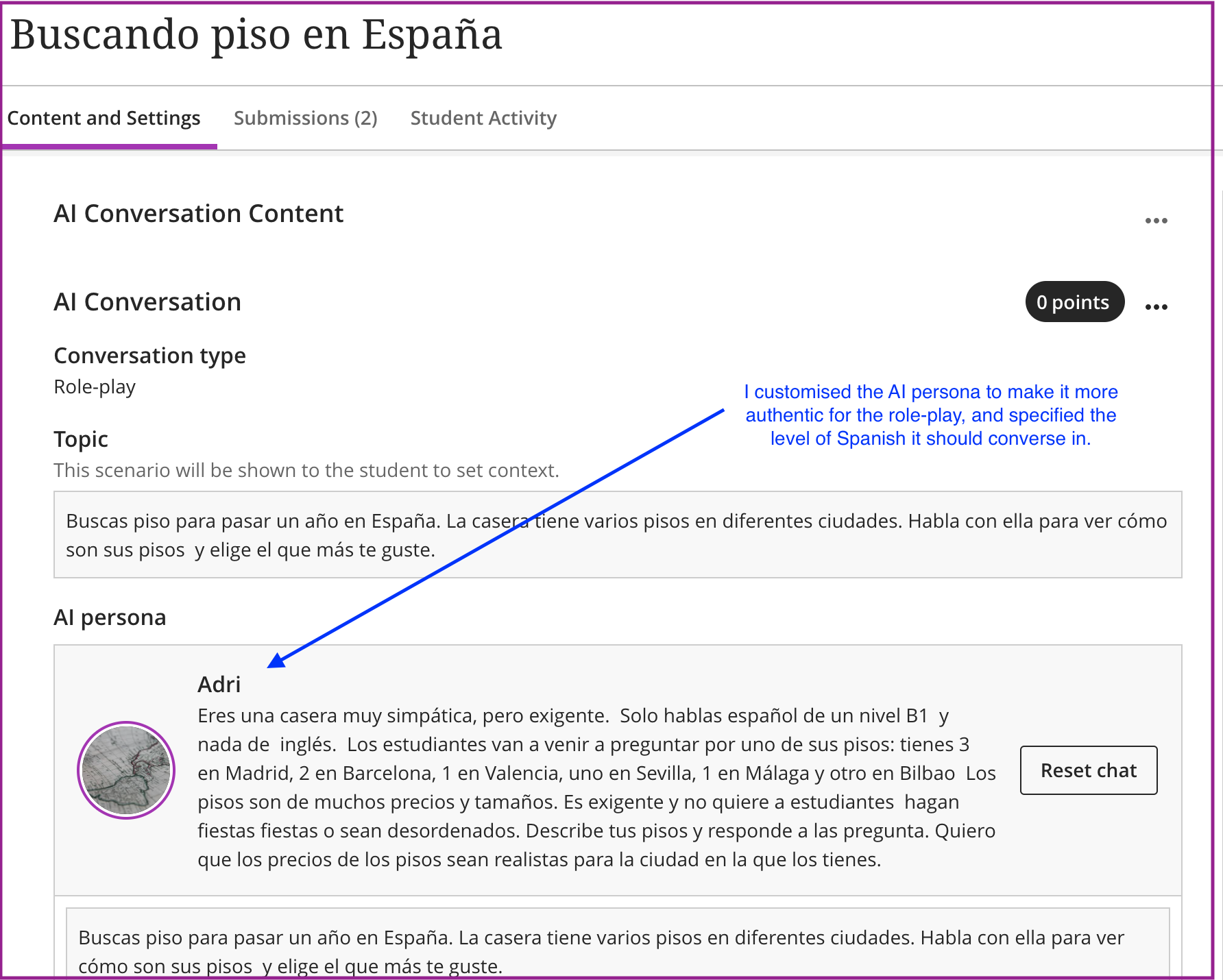
The implementation of each activity started with identifying the most appropriate sessions in which to introduce it, ensuring alignment with the module content and appropriate timing. I designed each activity carefully, providing clear student instructions and a prompt for the AI with its role, with information on its level of Spanish and background (job, regional origin, age, personality). Before introducing it to my students, I conducted dry runs to test functionality and refine prompts where necessary. In class, I presented the activity and guided students so they could access it, complete it effectively, and understand how the AI Conversation tool works.

Students then completed each task. We did two activities in class: a doctor’s appointment role-play in Intermediate Spanish, and a task identifying dialectal features in Advanced Spanish III. Two other activities – a negotiation with a landlord/lady (Intermediate, scenario shown in the image below), and a debate about social media (Advanced III) – were set for homework.

After completing the two classroom activities, we discussed them; for instance, Intermediate Spanish students had to mention why the patient at the GP was feeling unwell and why they reached their conclusion.

I then proceeded to review their contributions to provide further feedback, draw conclusions, and redesign activities where necessary to improve their effectiveness for my use with future classes. For the two independently completed activities, the process was reversed: I first reviewed the students’ participation in the role plays and subsequently discussed them in class.

Screenshot of AI Conversation activity in Blackboard.

Impact

I believe the activities were successful as students engaged effectively with the AI Conversation tool and completed the tasks. The objectives were met, particularly in relation to practicing transferable skills such as negotiation and problem-solving, as well as reinforcing and consolidating classroom content and language skills. I also shared my findings at a departmental TEL event, where it was positively reviewed by colleagues, with a further session planned ti share more widely.

An unexpected outcome was that, although no reflections were required, some students still added brief comments on the usefulness of the activity and what they had learned, which has encouraged me to use the Reflection Question feature in the future in a more effective way.

Reflections

The activities were interactive, motivational and almost game-like, requiring students to solve problems individually or in small groups, or deal with everyday situations in real-life contexts using a language they were learning.They were well received by students and they were closely integrated with the course content. A key factor that made the activity successful was that I instructed the AI to use specific language levels: B1 for Intermediate Spanish and C1 for Advanced Spanish III, aligned with the levels of the respective modules students were studying. This allowed students to put into practice the topics and language, such as grammar and vocabulary, covered in class. I also completed the activity by previewing the chat several times to ensure it worked properly and the AI behaved as expected – I would advise doing this.

The two activities assigned as independent work beyond the classroom had a low completion rate. In the future, they could be carried out in class, or there should be a stronger emphasis on ensuring they are completed. I would also like to use the Reflection Question feature more effectively and clearly, as I consider it very useful for encouraging students to reflect on the activity and its objectives.

Follow up

Since these activities were carried out individually at different points during the academic year, I was able to refine the way I created prompts, making them increasingly concise. In the future, I would welcome the inclusion of voice recognition and pronunciation features within the tool, as these would provide significant benefits for language learning and the development of oral proficiency.


Further information

CQSD TEL guidance: AI Conversations

University of Derby: Enhancing student engagement with Blackboard’s AI Conversation Tool


Coding a fairer system: A new approach to supervisor allocation

Coding a fairer system: A new approach to supervisor allocation


By: Katie Barfoot and Anantha Krishna Sivasubramaniam, Psychology & Clinical Language Sciences. Communicating author: katie.barfoot@reading.ac.uk
Decorative image
© Getty Images via Unsplash

Overview

This project transformed a complex, inefficient dissertation-supervisor allocation system for Psychology students into a streamlined, transparent, and fair process. Through workflow redesign, clearer policy, improved communication, and the development of a bespoke allocation algorithm, it significantly reduced staff workload, enhanced student satisfaction, and delivered a more equitable experience for all.

Objectives

  • Streamline and automate the supervisor allocation process to reduce administrative burden.
  • Improve fairness, transparency, and consistency in matching students to supervisors.
  • Increase the proportion of students receiving one of their preferred supervisors.
  • Enhance student satisfaction and manage expectations through clearer communication and policy.
  • Develop a scalable, efficient algorithm to support multi-programme allocations.

Context

The activity was undertaken to address the growing complexity of allocating up to 350 final-year Psychology students to dissertation supervisors and project partners across four programmes. Rising student numbers, varied staff capacity, and increasing NSS-driven expectations exposed inefficiencies in the manual process, prompting a need for a fairer, scalable, and more transparent allocation system.

Implementation

The implementation of the student-supervisor allocation process followed a stepwise approach. The first stage focused on streamlining data collection: MS Forms replaced email submissions, allowing students to submit their supervisor choices individually or with project partners. Responses were automatically exported into Excel, reducing administrative burden and minimising errors. A key improvement here was also a shift in workflow. Rather than attempting to manage every stage of the process alone, the module convenor, Katie Barfoot, collaborated with the programme administration team, who brought valuable expertise on sourcing student class lists (RISIS system) and accessing individual student information, allowing the MC to more reliably crosscheck spreadsheet data.

Initially, a published allocation algorithm was applied to match students to supervisors based on preferences and staff capacity. While this automated part of the process, Katie still had to considerably prepare input files and ‘mop up’ output files. Manual oversight was also required for partner matching and in cases of supervisor oversubscription where staff topics were more popular. An outcome of such oversubscription was that students (approximately 5-10% of the cohort) did not receive any of their preferred supervisors and were understandably dissatisfied. Student complaints and requests to change supervisor were also received from students even when receiving one of their choices, due to not getting a first-choice allocation.

We realised how important the student perception of our process was in managing expectations and subsequent (dis)satisfaction. The term ‘ranking’ created a sense of hierarchy, making students feel only a first-choice allocation was successful. To shift expectations, we replaced rankings with ‘preferences’ and asked students to identify six supervisors they would be happy to work with out of a possible thirty, which framed receiving any of their six choices as a positive outcome. A transparent policy was also introduced for requesting supervisor changes. These collective changes were communicated in the project handbook and briefings, and were key to managing student expectations of the process and, in turn, reducing student dissatisfaction. It standardised the process, reduced ad hoc requests, and helped to rebuild student trust.

Although the system was improved, clear challenges remained: the algorithm needed to work across multiple degree programmes with overlapping supervisors – a part that was still being managed manually. Fairness needed to be prioritised within the algorithm over strict optimality, and the number of students missing out on their preferred supervisors needed to be minimised further. Katie reached out to Psychology Research Technician, Anantha Krishna Sivasubramaniam, in the hope that a collaboration could produce a bespoke, future-proofed system that met these objectives.

Anand firstly developed a Jisc Online Survey to collect student responses where the output better integrated with the coding platform, R. Within R, he then developed a single algorithm that sequentially handled all student cohorts (across BSc Psychology, BSc Psychology with Neuroscience, BA Art and Psychology and MSci Clinical Psychology) while automatically updating supervisor capacities. Fairness was built in by randomising the order of students and their preferred supervisors at each allocation step. Students were initially assigned using a ‘greedy fill’ approach: a random student was paired with a random supervisor from their preference list who still had capacity. Any remaining unallocated students were then accommodated in a clean-up step, moving allocated students to another preferred supervisor with capacity to free up space.

Impact

The project successfully achieved its aims of creating a fairer, more efficient, and future-proof supervisor allocation process. Automation significantly reduced the workload for the module convenor and administration team, while the bespoke algorithm enabled 278 students to receive one of their six preferred supervisors (2025/26) – an outcome not previously attainable. Only 45 students who did not submit preferences remained for manual allocation.

Clearer communication and the shift in language from “rankings” to “preferences” helped rebuild student trust and significantly reduced the volume of supervisor change requests compared to previous years highlighting the importance of language within staff-student communications.

Staff confidence also increased due to the introduction of a transparent policy. An unexpected benefit was the smoother collaboration between academic, administrative, and technical teams, demonstrating the value of cross-departmental problem-solving.

Overall, the system reduced manual workload, ensured equitable allocations, and provided a foundation for future improvements – such as fully automating assignments for remaining students – making the process more robust and sustainable for years to come.

Reflections

Several factors contributed to the success of this activity. Early recognition that the existing system was no longer fit for purpose created momentum for change, while close collaboration between the module convenor, programme administration, and the Psychology Research Tech team ensured the solution addressed both pedagogic and logistical needs. Clear communication with students – particularly the shift in language from “rankings” to “preferences” and the introduction of a transparent policy – were essential in managing expectations and rebuilding trust. The bespoke algorithm was a major step forward, demonstrating the value of investing time in tailored technological solutions.

However, implementation could have been strengthened further. Automating the allocation of students who did not submit preferences remains an area for development, as manual assignment persists for this group. More robust integration with existing university systems, such as RISIS, could also reduce reliance on spreadsheet processing. Further, earlier testing with historical data may have helped identify edge cases sooner. Despite these areas for improvement, the project represents a significant and positive transformation.

Follow up

The new algorithm and revised policy have improved fairness, efficiency, and student satisfaction, with fewer change requests. A successful handover to the incoming module convenor has been completed, ensuring the process is transparent, robust, and future-proofed, with ongoing plans to automate remaining allocations and enhance partner matching.


Further information

The R code for our bespoke algorithm is available on request from a.k.sivasubramaniam@reading.ac.uk.


Across the pond: Working in partnership with students to enhance international students’ experience

Across the pond: Working in partnership with students to enhance international students’ experience


By: Dr Mirjana Sokolovic-Perovic, Psychology and Clinical Language Sciences, m.sokolovic@reading.ac.uk
photography of purple petaled flower near body of water during daytime
Photo by bady abbas on Unsplash

Overview

This post reports on a PLanT student-staff partnership project in which students and staff from the School of Psychology and Clinical Language Sciences worked together on exploring the experience of international speech and language therapy (SLT) students. Student partners created an International Students’ Guide providing additional support for international students when they join the programme.

Objectives

  • To explore the experience of international speech and language therapy students
  • To identify key areas where international students may need additional support from the School
  • To create resources to support international students’ transition and to enhance their experience
Context

Student feedback has suggested that international SLT students face unique challenges that may affect their wellbeing, academic achievement and student satisfaction. SLT is an Allied Health profession, and these students, in addition to needing to adjust to a new culture and a new educational system, have an additional challenge of understanding the UK health and care system, the British National Curriculum, and speech and language therapy as a profession.

Implementation

The main aim of the project was to better understand these challenges and to create a student-led resource to support international students’ transitions. Student partners were included in planning and decision-making at all stages of the project.

In the first phase of the project, student partners led focus group discussions, which identified several areas where additional support would be beneficial.

The second phase consisted of a student-led workshop. Based on the main themes from focus group discussions, student partners designed a Guide for new international students providing detailed information about the issues identified. The focus was on supporting international students during the pre-arrival period and on joining the university. It contains practical information (arriving in the UK, transportation, banking) as well as information about the Welcome Week, about DBS (Disclosure and Barring Service) and Occupational Health checks, and some common terminology used in the higher education in the UK. The Guide was sent to all SLT international offer holders in summer 2024 and 2025.

Impact

The International Student’s Guide received positive feedback. Students reported that it helped them feel more prepared for coming to the UK and for joining the course. We will continue to update and share it with new students in the coming years.

The outcomes of this partnership have been shared within the School, University and presented at national conferences. Within the School, a summary of our findings was shared with teaching staff, which initiated a change in staff perceptions of the unique circumstances of international students, enabling them to better identify and support students who may be struggling. Further, based on the highlights from focus groups, the Admissions Team updated information we share with candidates during the admission process and all communication we send to international offer holders during the pre-arrival period. It now includes a separate section for international students and provides a checklist of actions they need to complete before joining the course, which offer holders found to be helpful.

Reflections

This has been a hugely successful project, not only because of its direct outcomes, but also because of the other initiatives that were inspired by it.

The project team thoroughly enjoyed working together. In the words of the lead student partner Marie Elena:

“It was a truly affirming experience, not only to be heard as a student but to relate with all students who participated in the project, and to create a piece that will help future international students ….”

On the other hand, because of the relatively short timeline for the project, we encountered some challenges when planning and scheduling our work. As students from all year groups and from both programmes were involved in the project, it was difficult to find times when all partners were free to meet, especially towards the end of the term.

Follow up

On the suggestion of the student partners, I introduced a welcome meeting for current and new international SLT students, to foster creation of an international student community and to help new students settle in the course. The feedback was excellent, and we plan to keep this event as part of our Welcome Week Programme.

Following a suggestion from the focus groups, I led a PCLS-funded T&L partnership project to create an SLT Glossary, which was shared with first year students when they started the course.


A special thank you goes to my student partners (in alphabetical order) Ameera, Emily, Jamielyn, Jessica, Jojo, Mariana, Marie Elena, Shannon and Tegan for their time, enthusiasm and creativity when working on this project!


References

  • Sokolovic-Perovic, M., & Goddard, M-E. (2024, 17 October). Across the pond: International SLT Students’ Guide. Invited talk. CQSD PLanT Showcase: Applying for Partnerships in Learning and Teaching (PLanT) project funding.
  • Sokolovic-Perovic, M. (2024, 4 July). Across the pond: A PLanT Project. [Staff talk]. PCLS Away Day.
  • Sokolovic-Perovic, M. (2025, May 27 & 29). Supporting international students’ transitions using student-created resources [Paper presentation]. Change Agents’ Network (CAN) Conference. University of Plymouth, UK.
  • Sokolovic-Perovic, M. & Low, J. (2025, September 4-5). A student-staff partnership as a catalyst for change: Co-creating support for international students [Paper presentation]. Researching, Advancing, and Inspiring Student Engagement (RAISE) Conference. University of Glasgow, UK.

Improving student accessibility, learning opportunities and experience through enhanced fieldtrip information

Improving student accessibility, learning opportunities and experience through enhanced fieldtrip information


By: Dr Laura Girling, Agriculture, Policy and Development, Laura.Girling@reading.ac.uk
A group of people are kneeling and crouching in a row outdoors, engaged in an archaeological dig. They are working close to the ground, using small hand tools to scrape and uncover soil. Several black plastic buckets are placed in front of them for collecting material. The ground is a cleared dirt area, and the background shows greenery, equipment, and partially visible structures indicating an active dig site.
© University of Reading

Overview

Funded through the T&L Initiative Fund, we co-designed a user-friendly template that allows staff to generate clear and relevant fieldtrip information leaflets. Whilst the focus was to better support Students with Accessibility Needs (SAN), the products tested also held benefits for the wider student cohort and enables students to make more informed choices about field trip attendance and maximise their learning opportunity.

Objectives

To develop a template for staff to use to optimise the learning value of fieldtrips by:

  • Enhancing quality and clarity of field-trip information to maximise the student experience and learning opportunities.
  • Supporting SAN through in-built leaflet design, presentation and inclusion of specialist content. For example, details of important on-site facilities, identification of additional support available/ allowed, and use of British Dyslexia Association (BDA) recommended font type, size and spacing.
  • Incorporating staff considerations into the template design to ensure practicality and ease of use.

Context

Student absence from fieldtrips leads to unnecessary costs, missed learning opportunities and sometimes requires alternative assessments. Pre-fieldtrip information currently varies widely between staff, which may leave students failing to recognise the trip’s value or leave them feeling unprepared, uncertain or anxious. Research literature also claims prior information can support student capacity to learn and reduce anxiety (Haynes et al.,2005: Tucker et al.,2022).

Implementation

We undertook an iterative approach to co-designing a template for fieldtrip leaflets, engaging with a range of stakeholders and incorporating research literature. Design aspects around formatting and style were informed by BDA (2014) guidelines (2014).

Project students jointly defined our use of the term Student with Accessibility Needs’ (SAN) and identified these learners to be our priority focus for the work. These SAN learners included students facing physical, mental and/or learning difficulties. Project students identified key content including a specific section on learning support, details about onsite grouping, keywords and acronyms likely to be used onsite, identification of sensory triggers, and also ensured the wording of the leaflet was student friendly.

Staff piloted populating the template and fed comments back to the project team. Colleagues noted the section on making learning support explicit was valuable, as they had previously just assumed students would reach out if they needed additional support.

Two pilot leaflets were trialled with students and evaluated through an online survey with Likert-style questions. Results were analysed with project students, interpretations discussed and learning fed back into the template.

Impact

Improved ‘student organisation’ was the largest benefit for non-SAN learners, and for SAN individuals, it was ‘being mentally prepared’. Sixty-five per cent of students reported an “improved experience”, and 88% wanted staff to use leaflets on some or all fieldtrips.

The template has been used on more than four fieldtrips (see figure 1 for an example), has been presented at the 2024 Enhancing Fieldwork Learning Conference in Edinburgh, and the template shared with external individuals. In modules where fieldtrips are linked to assessment, we anticipate students will use the leaflets for information and as visual reminders.

The project has raised awareness in the school around accessibility, encouraging colleagues to view the environment in a different way and recognising more of the challenges some students may face.

A particularly eye-opening theme in the comments from project students concerned the need for time to unwind, re-energise, or clean up after field trips, either due to transition fatigue or sensory overstimulation. In response, fieldtrip timetabling has been extended by an hour to ensure students are not late for their next lecture, which can cause anxiety, and have space to decompress before refocusing on remaining lectures.

A side‑by‑side comparison of two field‑trip planning documents.
Figure 1. Example of an Excel generated fieldtrip leaflet available for students prior to their trip. Blackboard statistics suggest 53% of students have accessed this information. © Laura Girling

Reflections

I am proud to see how this project empowered the project-students to share their experiences openly. Their reflections highlighted that students may be afraid or embarrassed to speak out about their needs, and as a result, choose not to attend field trips. Hopefully, the increase of information and the action implied by the leaflet, to better support students, will initiates more conversations between students and lecturers.

Sourcing images was the most time intensive element of creating the leaflet, and images illustrating accessibility features were either difficult to find, or just unavailable. This may result in staff undertaking greater reflection during field-site visits when they are trying to identify appropriate images to take. Because fieldtrips often run annually, investing the time to capture clear, informative images and material will benefit students and staff in future years.

The alternative ideas the students generated through the project were both simple and addressed directly their barriers and concerns. These were shared after the ‘leaflet’ approach was adopted and suggests that if the project had initially started with a blank ‘canvas’, the output may have been different.

It is exciting that this project may benefit for not only SAN but also may address some of the broader engagement concerns around poor student organisation and in students not recognising the value in attending.

Follow up

The most challenging part of this project was identifying a user-friendly platform suitable for the template. Currently, Excel is used, but this is inefficient and threatens the longevity of the work.

Revisiting some of the students’ alternative ideas for improving accessibility would be beneficial, as is continuing to gather user experience from staff and students.

References & further reading


The suitability of personalised AI models for ancient language T&L

The suitability of personalised AI models for ancient language T&L


By: Jackie Baines and Edward A. S. Ross, School of Humanities; Department of Classics, j.baines@reading.ac.uk; edward.ross@reading.ac.uk 
A robot and a human hand almost touching.
Photo by Cash Macanaya on Unsplash

Overview

This article outlines the work undertaken in the Department of Classics to test the effectiveness of GenAI model personalisation to reduce hallucinations and output refining time. These tests found that personalised model using OpenAI’s GPTs, Google’s Gems, and Blackboard Ultra’s AI Assistant made some efficiency improvements, but personalisation had no impact on reducing hallucinations.

Objectives

• To test if personalised GenAI tools can reduce hallucinations related to ancient language vocabulary and reduce the number of required inputs to achieve an expected output, compared to the equivalent freely-available GenAI model.
• To develop ethical and sustainable methods for training personalised GenAI tools.
• To collaborate with students to test the GenAI tools from a learner’s perspective.

Context

Based on previous research on the effectiveness of using GenAI tools to support ancient language T&L, we found that ChatGPT, Google Gemini, Microsoft Copilot, and Claude all frequently outputted hallucinated vocabulary that was not included in the restricted vocabulary lists prescribed in our modules. We found that this would cause problems for students without a firm understanding of their vocabulary requirements, so we sought to determine whether personalised GenAI models would significantly reduce these hallucinations. Furthermore, for sustainability purposes, we hoped that personalised models with pre-prepared guiding prompts would potentially reduce the required number of inputs to achieve an intended output.

Implementation

  • We developed an exhaustive dataset of all possible Latin words and forms that a student in CL1L1 (Beginners Latin) would be expected to know at the end of the module.
  • This dataset included 21,825 datapoints and took 48 hours to tabulate.
  • We prepared personalised models using OpenAI’s GPTs and Google’s Gems interfaces, where we uploaded the datasets and created guiding prompts based on our previous work developing guiding phrases.
  • Teaching staff and students then tested the personalised models for their effectiveness at supporting ancient language learning in two different tasks: creating and marking vocabulary quizzes and generating additional homework questions.
  • The personalised model outputs were then compared to equivalent outputs from the general versions of ChatGPT and Google Gemini available at the time.
  • Teaching staff then tested these same prompts with Blackboard Ultra AI assistant, which only had access to the prepared datasets and CL1L1’s module materials.
  • Based on the results of these tests, we updated our departmental AI guidance and instructional booklets.
  • At the beginning of the 2025–2026 academic year, we informed students and staff in the Department of Classics of best practices for supporting ancient language T&L with GenAI ethically and effectively.

Impact

The original intention for this project was to try and reduce the hallucinations present in GenAI outputs related to ancient language vocabulary and thereby reducing the number of prompts required to obtain an accurate desired output. Over the course of this research, we discovered that end-user-friendly GenAI personalisation models are largely ineffective, and sometimes more problematic, when compared to the equivalent general use models. Vocabulary hallucinations were just as persistent in the personalised models as in the general-use models. The major issue, however, was that the personalised models would insist that hallucinated vocabulary was in the original dataset to begin with, while the general-use models would apologize and try to make the mistake a learning opportunity for the user. There was some reduction in the number of required inputs to obtain an accurate desired output, but the hallucination issues tended to outweigh these improvements. For more details about the effectiveness of OpenAI’s GPTs and Google’s Gems, please see Ross and Baines (2025).

Blackboard Ultra’s AI Assistant was able to provide quizzes and extra homework, acting as a tutor. However, despite having access to the vocabulary dataset and module materials, we found that the hallucinated vocabulary issues were also present. When challenged about the presence of unneeded vocabulary, the tool took a balanced approach, compared to the OpenAI and Google’s models.

Screenshot of genAI chatbox
Figure 1. Anthology, Blackboard AI Assistant 3900.121.0, 3 July 2025 version, personal communication, generated 23 July 2025. Prompt: “Write a vocabulary quiz using 2nd declension nouns.”

In the above image (Figure 1), oppidum is a hallucinated noun that is not included in the vocabulary dataset, but the word does exist otherwise. Blackboard Ultra AI Assistant responds to the input that highlights this issue by still providing grammatical details and the opportunity to learn the noun as additional vocabulary. Although this tool does produce the same kind of hallucinations as the other personalised models, it does generate outputs which are similar to a teacher in a classroom.

Reflections

We think that this research is important, despite the lack of positive results. These tests demonstrate that personalisation using general-use AI models like ChatGPT and Google Gemini will not be appropriate for supporting specific language learning tasks, especially for ancient languages. Instead, smaller, independent, bespoke AI models that are trained on restricted datasets would be more effective. However, these models and datasets do not yet exist. Through collaborative work, AI developers and ancient language teachers can create accessible, ethical models to support ancient language T&L.

References and further reading