Enhancing Students’ Sense of Belonging in a Global University

Enhancing Students’ Sense of Belonging in a Global University


By: Professor Elisabeth Wilding & Professor Daguo Li, International Study and Language Institute (ISLI), e.a.wilding@reading.ac.uk; d.li@reading.ac.uk


Excerpt

“This case study reports on a one-year initiative to develop collaborative exchange activities for undergraduates involved in transnational (TNE) programmes offered at both the NUIST Reading Academy (Nanjing, China) and the University of Reading”.
Overview

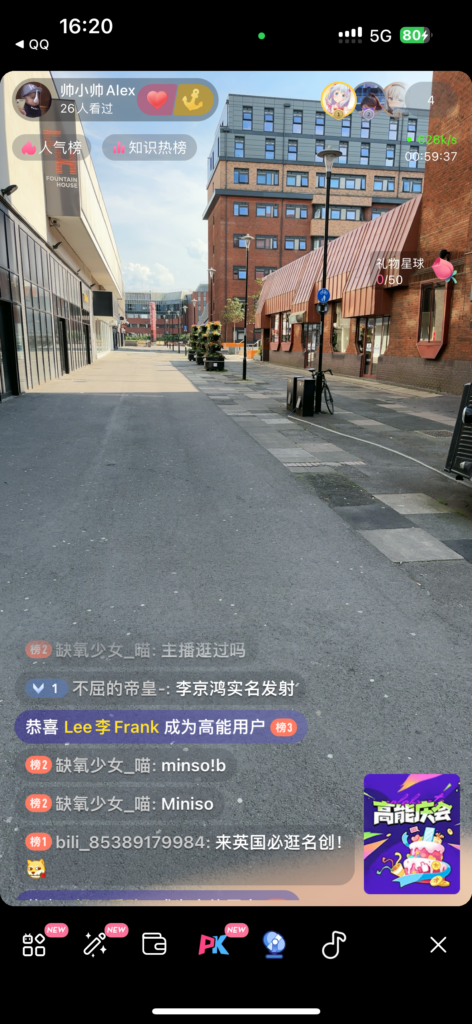
By working with students, we developed both staff-led and student-led activities to create opportunities for inter-campus interaction. As a result, there was an increased level of collaboration between students in China and the UK, through online conversation cafes, an intercultural communication seminar, and two live broadcasts.


Objectives

· To develop collaborative exchange activities for students involved in programmes offered at both the NUIST Reading Academy and in the UK.

· To build sustained interaction that would enhance the students’ feeling of belonging within our global university.

· To have a positive effect on the overall student experience.


Context

The project was designed in response to concerns voiced by students at the NUIST Reading Academy (China), who reported how they felt a lack of interaction or connection with the UK campus. We aimed to engage students on the two campuses in shared activities that could enhance experiences for everyone.


Implementation

1. To launch the project, we collected input from Nanjing-based students on their ideas for collaborative activities.
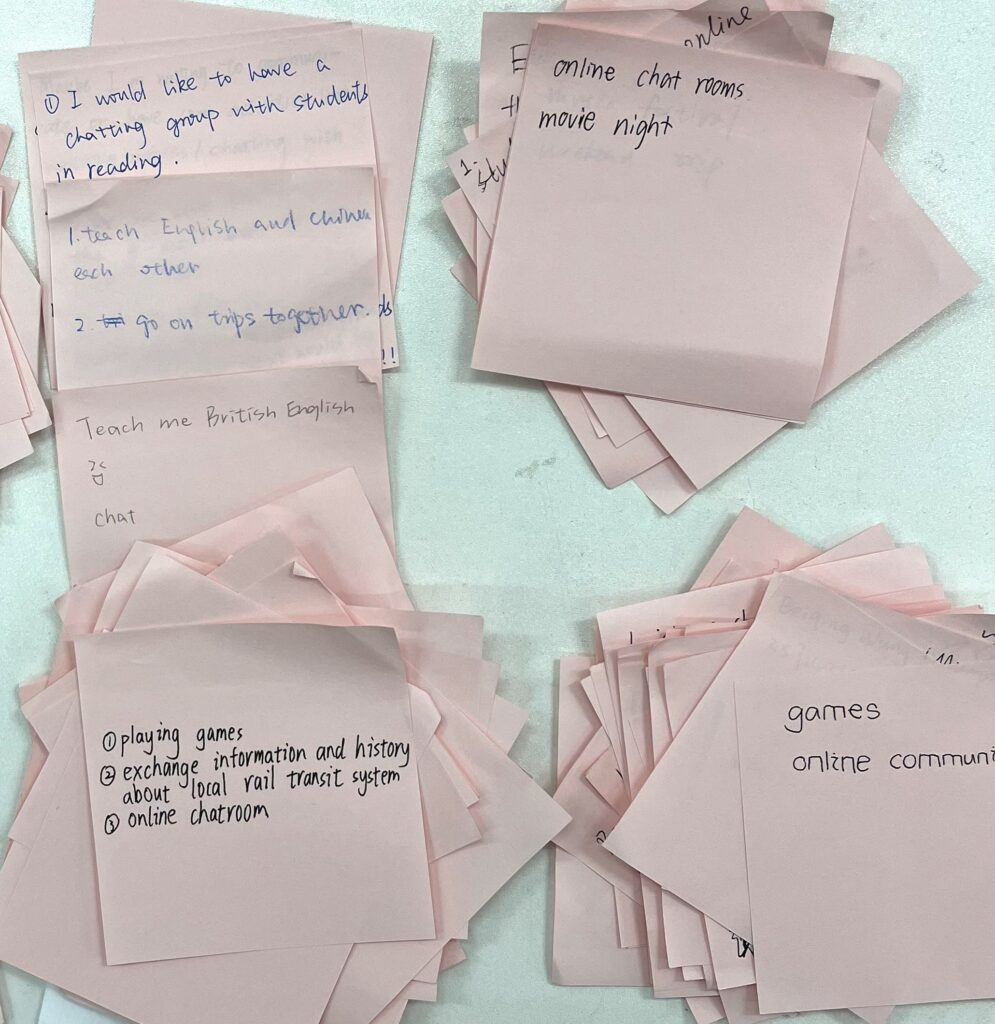
2. We held a series of meetings with our student partners, including an induction, as well as brainstorming and planning sessions.

3. We encouraged students to tak

e the initiative to suggest and lead activities.

o Two student partners worked together to successfully organise broadcasts from the UK to enable Nanjing-based students to sample “live” the UoR campus life and town life.

o Other partners attempted to engage RUSU student societies in collaborative activities (though with less success).

4. Staff-led activities were run concurrently, including an intercultural communication workshop with Nanjing- and Whiteknights-based students during a flying faculty visit to the Academy. We also arranged for Academy students to have access to the Online English Conversation Cafes at UoR, which attracted a number of enthusiastic participants from China. Both of these activities will be sustained beyond the project end.

5. Student feedback was collected at each stage.


Impact

The Project has achieved its objectives overall. , There was an increased level of interaction between students in China and the UK. Here is one example: The Academy students now have access to the online English Conversation Cafes that take place about every two weeks during term time. We have records that students signed up to the Cafes, and a number gave positive feedback to the organiser. Both students in Nanjing and Reading benefitted from the online intercultural exchange, so we will continue in 2024/25.

We have also learned valuable lessons from this experience. Challenges included engaging student partners on the student-led activities. It was partly due to assessments and crunch points in student life.


Reflections

· For student-led activities, they were more successful if student partners had experience of organising similar activities already.

· Initial staff encouragement, support and monitoring for student-led activities were important.

· Integrating staff-led activities proved to be successful and sustainable.

· Long-term planning would be needed if activities are to involve student bodies such as the Students’ Union or its societies. The length of the Project meant that it was impossible to do long-term planning.


Follow up

Online English conversation club, Intercultural Communication workshop and increasing student exposure to UoR presence in Nanjing have continued even after the project.


Co-Creating a Programme Focussed Assessment Strategy in BSc Food Science

Julia Rodriguez Garcia: Department of Food and Nutritional Science

j.rodriguezgarcia@reading.ac.uk

Link back to case studies on the T and L Exchange website

Overview

This student-staff partnership involved students from all year groups, academics and the programme administrator of the BSc Food Science. In this PlanT project the Transforming the Experience of Students through Assessment (TESTA) methodology was used to develop programme focus assessment strategy that could lead to a reduction in volume and improved distribution of assessment, and overall enhance student and staff experience

Objectives

The main aim of this project was to take an evidence-based approach to enabling a cultural shift required from ‘my module’ to ‘our programme’ to engage staff in an integral restructuration of the assessment design, volume, and distribution in the programme.

The main objectives of the project were:

  • To assess if there is assessment is evenly distributed in terms of volume and weighting and type across the programme
  • To explore and propose changes in the design of assessment tasks to move to a programme level assessment strategy that could improve student and staff experience

Context

Restructuration of programmes have been usually performed at modular level, resulting in limited coordination of the learning (including assessment) strategy at programme level. In the BSc Food Science this led to student complains about high volume of assessment tasks due in a short period of time. External examiners also commented on the high volume of coursework components. And staff was overload with marking and feedback tourn around deadlines.

Having small assessment tasks set within a module, results in only a small number of concepts assessed as part of each task which leads to losing the holistic perspective of the subject area creating the effect of fragmenting knowledge and promoting surface learning, such as memorisation of content. Thus, a change from assessment of learning to assessment for/as learning will facilitate a change in behaviours improving students’ motivation and rewarding staff efforts

Implementation

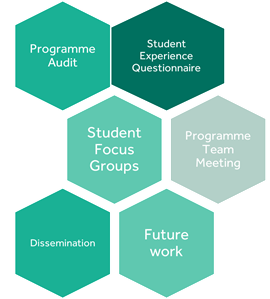
Figure 1. Structure of the Transforming the Experience of Students through Assessment’ (TESTA method)

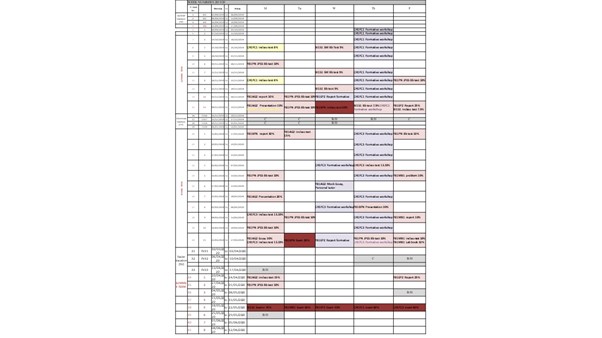
We developed Programme Level Assessment Maps that allowed us to calculate the number of assignments per credits, the weighting distribution per week and per term. These maps helped to create a visual interpretation of the students’ experience to increase staff awareness of the real situation at programme level (not just in their modules).

Assessment Map of Part 1 of an BSc in Food Science. Assessment activities are labelled in colours: purple for formative activities, pink for summative activities from compulsory modules, yellow for summative activities from optional modules, red for exams. The type of assessment activities and the weighting are also presented in the map.

In collaboration with students, we modify the Assessment Experience Questionnaire to give students more space to reflect in their experience when performing certain type of assessments. This questionnaire was run two consecutive years.

One of the students leading the PlanT project carried out a focus groups with students from all year groups to reflect and discuss on the way they learn, the skills the develop and the challenges they faced completing assessment tasks.

We combined all the data, discussed it in light of published literature and draw some final suggestions to modify our assessment design practices. The results and future strategies were presented in a staff meeting lead by a student.

Impact

This project has facilitated and achieved a change in staff mindset from module level to programme level. This has been reflected in a 9% reduction on assessment activities from 2018-2019 to 2019-2020.

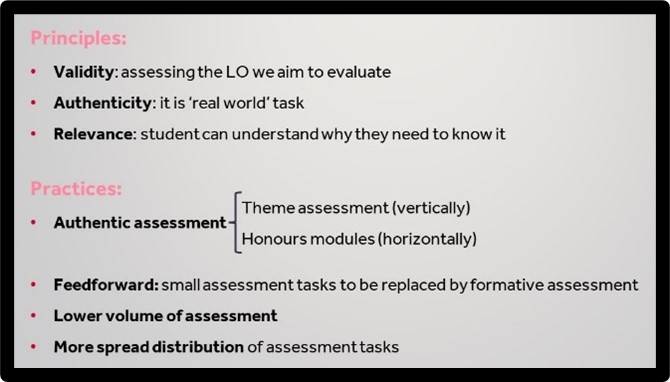
Figure 3: Principles and practices that will inform and define the implementation of a programme focused assessments trategy

This shift in focus will allow us to perform more holistic changes following a common set of principles that underpin the development of authentic assessment to promote higher order thinking skills, integration of knowledge (horizontally and vertically), and students’ motivation and independence.

The conclusions from this project and the proposed strategies to develop a programme level assessment approach have been implemented in the department through the Portfolio Review

Reflection

The development of a cohesive staff community of Programme Directors, Module Convenors, and support staff from the teaching hub with strong communication links is crucial for the design and delivery of a high-quality programme.

Moreover, student voice and partnership are crucial for the co-development of teaching and assessment approaches, working collaborations are transformational both for the community wellbeing and for achieving highly successful outcomes. Development of a sense of community within the department is something distinctive in Food Science.

Follow up

Brown, Sally, and Kay Sambell. 2020a. “Changing assessment for good: a major opportunity for educational developers.” Assessment, Learning and Teaching in Higher Education; Sally Brown. https://sally-brown.net/kay-sambell-and-sally-brown-covid-19-assessment-collection/.

Murphy, Vanessa, James Fox, Sinéad Freeman, and Nicola Hughes. 2017. ““Keeping It Real”: A Review of the Benefits, Challenges and Steps Towards Implementing Authentic Assessment.”. The All Ireland Journal of Teaching and Learning in Higher Education (AISHE-J) 9 (3):2801.

O’Neil, Geraldine Mary. 2019. “Why don’t we want to reduce assessment?”  All Ireland Journal of Higher Education 11 (2):1-7.

TESTA. Transforming the Experience of Students Through Assessment. https://www.testa.ac.uk/

Villarroel, V.; Bloxham, S.; Bruna, D.; Bruna, C.; Herrera-Seda, C. Authentic assessment: creating a blueprint for course design. Assessment & Evaluation in Higher Education 2018, 43, 840-854, doi:10.1080/02602938.2017.1412396.

Blended Learning – Exploring the Experience of Disabled Law Students

Amanda Millmore, Sharon Sinclair-Graham, Dr. Rachel Horton, Darlene Sherwood, Sheldon Allen, Lauren Fuller, Konstanina Nouka, Will Page & Jessica Lane

a.millmore@reading.ac.uk 

School of Law (& Disability Advisory Service)

Overview

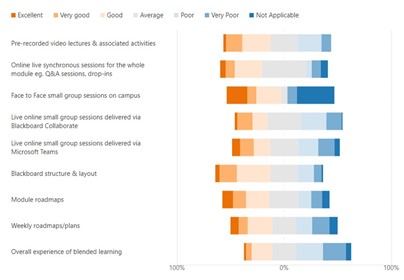
This student-staff partnership included students with disabilities and long-term conditions, academics in the School of Law and a Disability Advisor. Student partners ran a cohort-wide questionnaire and facilitated focus groups with disabled students to discover what has worked well this academic year with blended learning and where things could be improved. This work has provided a blueprint for those hoping to use blended learning to deliver accessible education for all.

Objectives

  • To magnify the voice of our disabled students
  • To understand the positives and negatives of blended learning from their various viewpoints
  • To improve current teaching, as well as planning for future teaching and learning activities.

Context

The move to blended learning during the Covid-19 pandemic led to many changes to of the way that Law was taught in the 20/21 academic year. Student-Staff Partnership Group (SSP) feedback indicated that disabled students were affected more than most by this change. This project was an opportunity to understand more about the impact on these students and to amplify their voices.

Implementation

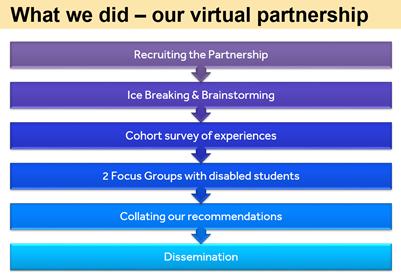
Given the constraints of working during the pandemic, our partnership worked virtually throughout, using only MS Teams meetings and sharing documents. Students designed a cohort-wide questionnaire to find out about the wider student experience with different aspects of blended learning.

This was followed-up by student partners facilitating smaller focus groups of students with disabilities and long-term conditions.

The partnership then assimilated all of the evidence they had gathered to produce short term and long term recommendations as well as highlighting what has worked well with blended learning.

Together we prepared a report with our evidence and recommendations and this has been shared not only within the School of Law but widely across the University, including with the University’s Blended Learning Project, the Technology Enhanced Learning (TEL) team and the Committee on Student Experience and Development (COSED), as well as with colleagues in different functions and departments.

Impact

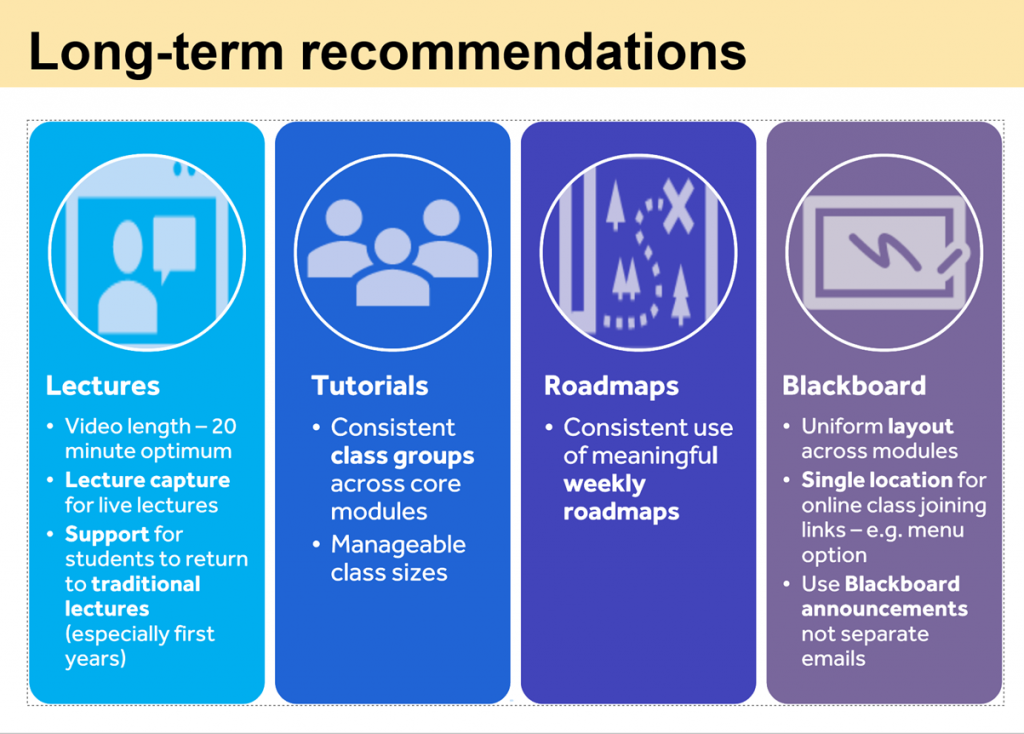
Positives from blended learning were highlighted including the flexibility of pre-recorded lecture videos, which enabled students to stop, pause and revisit lecture materials and work at their own pace and in their own time. Students preferred lecture recordings to be in the region of 20 minutes, as longer than that could pose a barrier for some students.

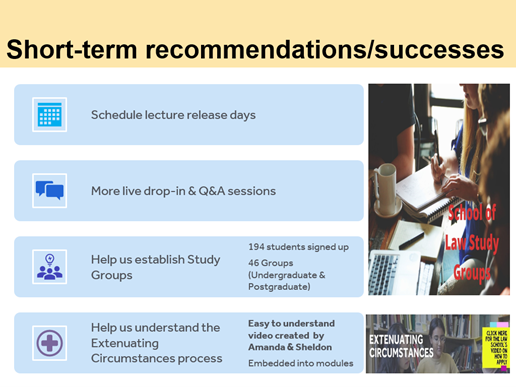
In the short term the partnership recommended the scheduling of lecture release days across core modules, so that lectures were made available on set days. 194 students were put into 46 study groups and a video to demystify the ECF process was recorded and shared widely (https://web.microsoftstream.com/video/714b6fa4-83f3-457c-a37b-3f4904e63691). These recommendations were all adopted.

Longer term the partnership recommended the consistent use of meaningful weekly plans (now part of the Teaching & Learning Framework for 2021/22) and improvements to Blackboard, notably a uniform layout across modules for Law students, including a single menu location for joining links to online classes.

The project and its recommendations have been shared within the School of Law, across the University and more widely at national conferences, all with students co-presenting the work.

Students were invited to the School of Law’s Blackboard Working Group and have been instrumental in driving forwards their recommendation for a consistent cross-module Blackboard layout for the next academic year. Students are also working with the TEL team to produce best practice videos for staff.

Reflections

This has been a hugely successful partnership project, not merely for the clear recommendations and tangible outcomes which are aimed to improve the experience of all students with blended learning this academic year and moving into the future, but also in the way that it has amplified the voices of students with disabilities and long-term conditions at School and University level.

As a partnership it has been influential, and the recommendations have been heard across the university and many have been adopted within the School of Law, but the positives for the individual student partners cannot be underestimated. They have gained valuable employability skills and experience in project work, presenting at conferences and advocating within meetings with staff. Moreover, as a project in which clear recommendations were given which have been heeded, it has improved the sense of community for all students, emphasising that the School of Law is a space where student views are important and they can contribute to their studies and make a difference.

Focus group participants with disabilities and long-term conditions have been empowered, with 2 first year participants subsequently volunteering for a new partnership project being run in the School of Law, as they can see the impact that their involvement can have.

Links and References

  • Amanda Millmore – “A Student-Staff Partnership exploring the experience of disabled Law students with blended learning at University of Reading, UK “ in Healey, R. & Healey, M. (2021) Socially-just pedagogic practices in HE: Including equity, diversity, inclusion, anti-racism, decolonising, indigenisation, well-being, and disability.mickhealey.co.uk/resources
  • Abstract for Advance HE Teaching & Learning Conference session: Teaching and learning conference – on demand abstracts_0.pdf (advance-he.ac.uk)
  • To follow – links to CQSD TEL videos & guidance (in progress).
  • We are happy to share the project report upon request – please get in touch if you would like a copy.

Student Researchers from the department of Art to present at RAISE 2013 by Christine Ellison

OSCAR 1


As we continue to develop OSCAR the online student community in Art our students are becoming more involved and more integral to the development of the project. Together we are researching innovative ways to integrate the social network, designed to support our studio modules, across all of our programmes in Art. We have been invited to present at the RAISE conference in Nottingham this September which we are delighted to be able to attend with support from Digitally Ready. The theme this year is The Future of Student Engagement: Partnerships, Practices, Policies and Philosophies. I am working with two BA students (from our OSCAR student research group) on a joint presentation about the collaborative process of developing OSCAR. We will address student engagement particularly in relation to partnerships and practices highlighting our current focus on developing students’ professional online profiles.

OSCAR 2The ‘member profile’ feature recently added to OSCAR enables students to start shaping a profile that represents them academically and professionally. Most students have several online ‘faces’ across the likes of Flickr, YouTube, Vimeo, Facebook, etc. We are keen to support them in shaping these identities and in learning how to ensure they are confident and informed about how these platforms represent them. They are increasingly aware of the importance of an online profile that can be separate from their social activities. And we as staff are keen to emphasise the value of an academic/professional space that is not public facing like sites such as LinkedIn.

We want to nurture and encourage a space where students learn how to shape their profile online in a sheltered environment. Learn is the key worked here. The time at University is an important pre-professional time where things should be tried, tested and developed. We want to foster an approach to building professional online identities that can evolve and develop without the consequences of immediate publication on a public facing network. The member profiles on OSCAR offer students this opportunity. They can build a profile through emphasizing their academic interests that enables them to connect with other students on different programmes and at various levels, whilst shaping their professional statement, CV, blog, website etc. in a subject specific peer group.

The students representing us at RAISE have the added opportunity of presenting at this high-profile conference. I am excited about the potential impact of this next year on the student research group, the wider student community in Art and the OSCAR learning environment.